
How to Build a Scalable Affiliate Program from Scratch

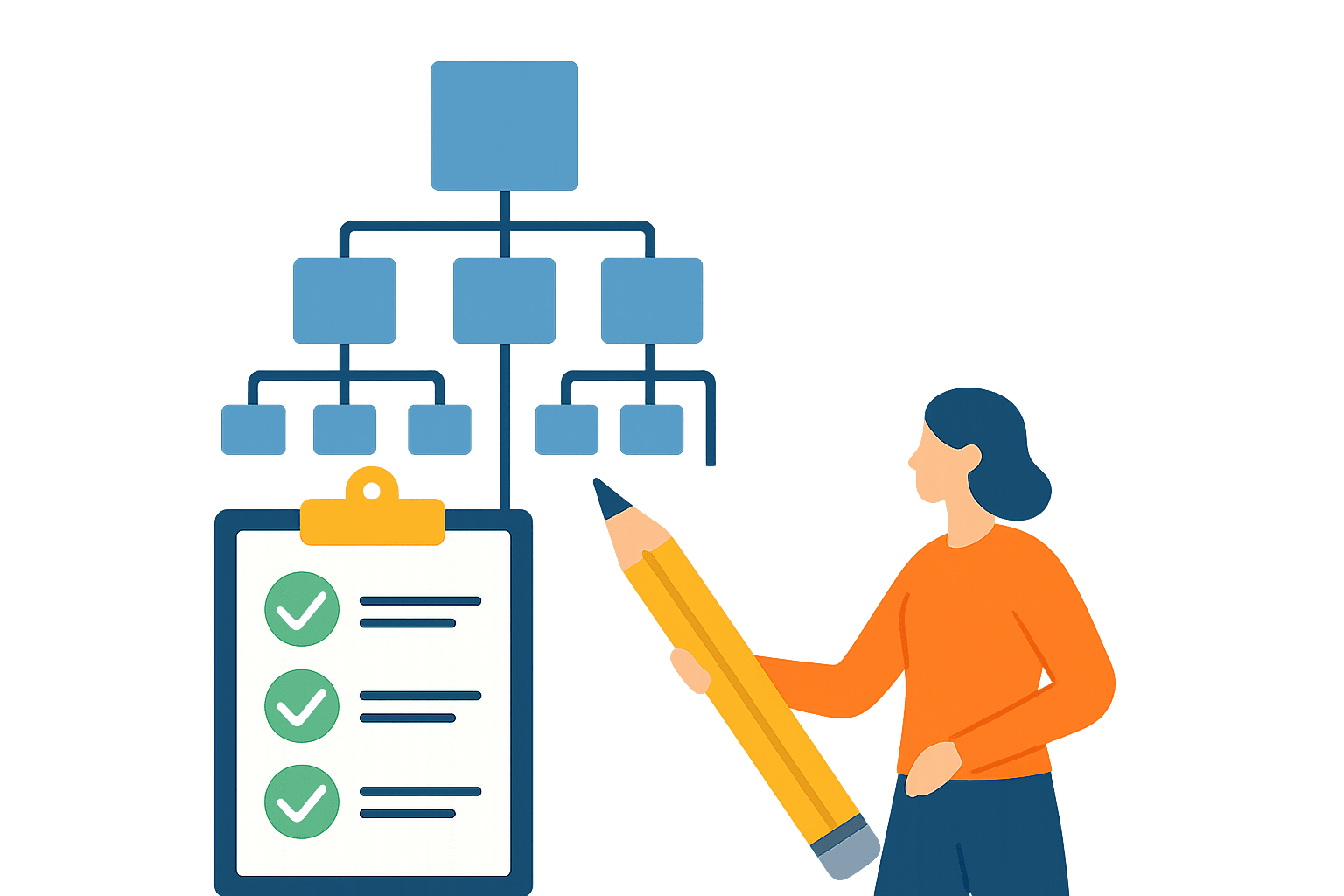
Launching a scalable affiliate program from scratch requires more than signing up affiliates and sending links. It demands strategic planning, a robust tech stack, and a data-centric mindset. As customer acquisition costs continue to rise, affiliate marketing remains one of the most cost-efficient and performance-driven channels. The key lies in building a system that grows with your business.
In this guide, we outline the critical steps to create a scalable, high-performance affiliate infrastructure—from goal setting to automation. Each phase is designed to ensure transparency, operational efficiency, and long-term partner satisfaction.
Step 1: Define Your Goals and Target Audience
Before writing your first tracking link, clarify what your affiliate program is supposed to achieve. Are you targeting signups, purchases, app installs, or recurring subscriptions? Establish KPIs that align with your business model, such as Customer Acquisition Cost (CAC), First-Time Deposits (FTD), or Lifetime Value (LTV).
Equally important is defining your target audience. Understand who your ideal customers are, which channels they use, and which types of affiliates can reach them most effectively. A clearly segmented audience profile allows for better partner targeting, messaging, and ROI measurement.
Define Your Ideal Affiliate Profile (IAP)
Once you know your end customer, define the partner who can reach that customer. An Ideal Affiliate Profile is the partner-side equivalent of an ICP — without one, recruiting becomes a numbers game and 70%+ of signed partners never produce a conversion.
Document at minimum:
- Traffic type — SEO content, paid social, email list, app push, influencer audience, comparison/coupon, sub-network.
- Primary GEOs and languages the partner covers.
- Audience signals — monthly visitors, list size, follower count, average EPC on similar offers.
- Prior verticals — partners who have promoted competing or adjacent offers ramp 3–5× faster than cold partners.
- Compliance posture — do they disclose, do they have a clean history with major networks.
Map archetypes against your vertical before you start outreach:
Affiliate Archetypes by Vertical
Step 2: Choose the Right Commission Model
Your payout structure is the foundation of your affiliate program’s attractiveness and sustainability. Common models include:
- CPA (Cost Per Acquisition): One-time payment per qualified action (e.g., sale, deposit)
- CPL (Cost Per Lead): Payment for valid signups or registrations
- Revenue Share (RevShare): Ongoing percentage of the customer’s spend
- Hybrid Models: Combination of upfront CPA and long-term RevShare
Choose a model based on your margins, cash flow, and product lifecycle. For example, RevShare works well in iGaming or SaaS, while CPA suits eCommerce or DTC brands seeking predictable costs.
Commission Rate Benchmarks: How Much Should You Actually Pay?
Commission rates vary dramatically across industries because margin structures, customer lifetime value, and acquisition dynamics differ. Paying affiliates 30% in a 15%-margin e-commerce category will bankrupt the program; paying 5% in a SaaS category with 80% gross margins will leave partners with no reason to promote you. Use the table below as a starting point, then calibrate against your own unit economics.
Commission Rate Benchmarks
Affiliate Program Unit Economics: The Four Metrics That Decide Everything
Most affiliate programs fail not because they lack partners, but because their unit economics never balanced in the first place. Before committing to a commission rate, calculate these four numbers. If the math does not work, no amount of recruitment or tracking sophistication will save the program.
- CAC (Customer Acquisition Cost via affiliate channel). Total affiliate payouts ÷ Number of new paying customers acquired. Must stay below your blended CAC to keep the channel profitable. Industry target: affiliate CAC = 60–80% of blended CAC.
- LTV (Lifetime Value of an affiliate-sourced customer). Affiliate-sourced customers often have different retention curves than organic or paid-social customers. Track LTV separately by channel. In SaaS, affiliate LTV is frequently 10–20% lower than organic (commission-seekers tend to churn faster), which should be priced into your commission.
- EPC (Earnings Per Click). Commission revenue ÷ 1,000 clicks, calculated per affiliate. EPC is how sophisticated affiliates compare offers. If your EPC is materially below competitor programs, top partners will deprioritize you regardless of the headline commission rate.
- Commission-to-LTV ratio. Total commission paid ÷ Customer LTV. The sustainable ceiling is 30–40% for most industries; programs running 50%+ typically eat into gross margin unless LTV is exceptionally high (iGaming RevShare is the common exception).
Quick worked example. A SaaS product with $100 MRR, 24-month average retention, and 80% gross margin generates $2,400 in revenue and roughly $1,920 in gross profit per customer. A 25% recurring commission for 12 months ($300) puts Commission-to-LTV at 12.5% — comfortably sustainable. The same 25% commission on a lower-retention product (6 months, $600 LTV) produces a 25% ratio, still viable but with less buffer for fraud and refunds.
SaaS Recurring vs One-Time Commissions
SaaS affiliate programs face a structural decision that e-commerce programs never have to make: pay once when the subscription is created, or pay continuously as long as the customer stays.
Recurring commissions (commonly 20–40% of MRR for 12 months, or for the customer’s lifetime) align the affiliate’s incentive with long-term retention. Partners are motivated to refer customers who are a genuine fit for your product, because they only earn while the customer keeps paying. This model also compounds — a productive affiliate’s passive income grows month over month, which increases the program’s stickiness against competitor recruitment.
One-time commissions (typically 50–100% of the first month or a flat dollar amount) are easier to budget and settle faster, but create an incentive misalignment: the affiliate is paid regardless of how long the referred customer stays. One-time commissions are often preferable for short-cycle products, free-trial-to-paid funnels, or programs where fraud risk and refund rates are high enough that paying on day 1 is unacceptable.
A common hybrid approach in 2026 SaaS programs: pay 100% of the first month (cash-out moment for the affiliate) plus 15–20% recurring for the next 11 months (retention alignment). This structure is used by ConvertKit, ActiveCampaign, and several enterprise SaaS vendors to attract top-tier partners.
Compensation Beyond Cash: Bonuses, Tiers, and Perks
A flat commission rate is the floor, not the ceiling. Top affiliate programs in 2026 stack additional incentives that increase activation, retention, and partner share-of-wallet:
- Performance bonuses — one-time cash bonuses at milestone volumes (first 10 sales, first $5k commission, etc.).
- Tier-based commission bumps — base 25% → Gold 35% → Platinum 45%, re-evaluated quarterly.
- Exclusive promo windows — time-boxed double-commission periods (Black Friday, fiscal year-end, product launches).
- Co-marketing budgets — joint webinars, sponsored content, paid-traffic budget for top-decile partners.
- Product credits or free accounts — especially in SaaS, where the partner’s own use of the product drives content authenticity.
- Annual partner summit or paid trip — used by enterprise SaaS programs to lock in top partners and surface roadmap input.
Mature programs allocate 10–20% of total channel budget to non-commission incentives. Programs that pay only flat commission see top-partner concentration drop year-over-year as competitors with stacked incentives poach them.
Step 3: Select Your Affiliate Management Infrastructure
Your technology stack will determine how efficiently you manage partners, track results, and scale. You can either:
- Build a custom platform (high upfront cost, full control)
- Use a third-party SaaS solution (fast deployment, lower cost)
One of the most robust affiliate platforms is IREV, designed for high-performance programs. It supports:
- Advanced tracking with S2S and SubIDs
- Real-time analytics and fraud protection
- Custom commission logic and partner segmentation
- White-labeled dashboards and branded onboarding
Selecting a platform like IREV reduces manual overhead, ensures scalability, and improves reporting accuracy.
How IREV Compares to Other Platforms in 2026
Readers know other platforms exist — here is an honest positioning matrix. There is no single right answer; each platform optimizes for different verticals.
Affiliate Platform Comparison 2026
No single platform is right for every vertical. IREV optimizes for verticals where data ownership, real-time lead distribution, and fraud control matter more than access to a publisher marketplace. If you are a DTC e-commerce brand seeking instant publisher reach, a network like Impact may be a faster path; if you need control over lead flow with sub-second routing, IREV is purpose-built for that.
In-House Program vs Affiliate Network: Which Model Fits Your Business
Founders repeatedly ask the same question: do we build our own affiliate infrastructure, or do we plug into an existing network like Impact, CJ, or ShareASale? The honest answer is that both work — but they optimize for different outcomes, and the wrong choice costs 6–12 months of lost momentum.
In-House vs Affiliate Network
A practical middle path: many mature programs run both models simultaneously — an in-house program for top-tier strategic partners (where data ownership and custom commission tiers matter) and a network presence for long-tail publisher acquisition.
Step 4: Develop Onboarding and Partner Resources
To attract and retain quality affiliates, offer professional onboarding and marketing materials. Provide:
- A partner handbook with terms, tracking setup, and payout details
- Ready-to-use creatives: banners, email swipes, landing pages
- Tracking tutorials and API documentation (if relevant)
Affiliates are more likely to promote your product if you make it easy for them to start. Invest in documentation, onboarding flows, and a knowledge base. This improves time-to-activation and partner loyalty.
The 30-Day Affiliate Activation Sequence
Only 20–30% of approved affiliates ever generate a conversion. A structured 30-day activation sequence raises that to 45–55%.
30-Day Affiliate Activation Sequence
Track activation rate as a top-line KPI. If it falls below 35%, the bottleneck is usually one of three: low-quality recruitment (fix Step 5), broken or confusing tracking setup (fix Step 6), or weak/missing creatives (fix this step).
Program Terms and Prohibited Activities: What to Put in Writing Before Launch
Before a single affiliate joins your program, a short, explicit set of program terms prevents 80% of future disputes. Affiliates who read clear terms and still apply are the partners you want; those who look for loopholes are filtered out at the door. The checklist below is the minimum set of clauses every affiliate program — whether in-house or on a network — should publish.
- Commission structure and payout schedule (e.g., net-30 after month close, minimum $50 payout threshold)
- Cookie duration and attribution model (last-click, first-click, multi-touch)
- Acceptable promotional channels (SEO, paid search, email, social, content — explicitly listed)
- Prohibited promotional channels (trademark bidding, incentivized traffic, pop-unders, adult sites if off-brand)
- Trademark and brand-bidding policy (e.g., “Partners may not bid on ‘IREV’ or common misspellings in paid search”)
- Coupon and discount policy (are affiliates allowed to create coupons? exclusive or shared?)
- Content guidelines (disclosure requirements per FTC, Amazon Associates–style disclaimers, no misleading claims)
- Return policy and commission reversals (commission clawback window if customer refunds within N days)
- Fraud policy and grounds for termination (cookie stuffing, fake leads, proxy/VPN traffic, bot clicks)
- Termination clause and surviving obligations (data retention, final payouts, NDA continuation)
- Governing law and dispute resolution
- Tax documentation requirements (W-9 for US, W-8BEN for international, VAT where applicable)
Step 5: Recruit Affiliates Strategically
Finding affiliates who convert is harder than launching the platform. Focus on quality over volume.
Recruiting Channels by Effectiveness
Channel choice should match your vertical and your team’s capacity. The table below scores eight channels against the verticals where they perform best.
Recruiting Channels by Effectiveness
Three Cold Outreach Templates That Work
Template 1 — Content/review site
Subject: Quick question about your [Competitor] review
Hi [Name],
Read your review of [Competitor] last week — the section on [specific detail] matched what we hear from customers. I run partnerships at [Company]. We’re a [1-line product description] with better [specific metric] than [Competitor] in [specific use case].
Our program pays [X]% recurring for 12 months, 60-day cookie, full S2S tracking, net-30 payouts. EPC for content partners is currently [$X].
If you’re open to it, I’ll send a free account so you can test the product before deciding on a review. No commitment.
— [First name]
Template 2 — Cross-promotion partner (complementary, non-competing)
Subject: Mutual referral with [Their company]?
Hi [Name],
We have an audience overlap your customers would benefit from — [your audience description, ~10 words]. Most of them eventually need a tool like yours.
Proposal: mutual referral partnership. We promote [their product] to our customers on day 30, you promote [your product] to yours at signup. Each side pays [X]% on referrals.
Open to a 15-min call to scope it out?
— [First name]
Template 3 — Existing customer → affiliate conversion
Subject: [First name], we’d like to share revenue with you
Hi [First name],
You’ve been a [Company] customer for [X months] and we noticed [specific positive signal — high usage, NPS, referrals, etc.].
Would you consider becoming an affiliate partner? Same [X]% recurring commission we pay external partners, plus a dedicated portal, your existing account upgraded to [Tier], and exclusive access to [perk].
Reply “yes” and we’ll send setup in under 30 minutes.
— [First name]
Always vet candidates before approval. Review traffic quality, compliance history, and geo-targeting. The cost of a bad approval (fraud + brand damage) is 10–20× the cost of a missed good partner.
Hiring Your First Affiliate Manager: When, Who, How Much
Most programs delay hiring an affiliate manager until the program is already underperforming. By then the founder has 50+ partners with no system, and the new hire spends two quarters cleaning up rather than growing.
When to hire
Triggers are operational, not time-based:
- Active partner count exceeds 30.
- Weekly partner communications consume more than 5 hours of founder or marketer time.
- Monthly channel revenue covers the salary at least 2×.
- A top partner has asked for a custom deal you don’t have time to negotiate.
In-house, agency, or freelancer?
- In-house — best for SaaS or technical products where the AM needs to understand the product deeply. 6–12 month commitment minimum.
- Agency — best for DTC e-commerce needing a publisher rolodex on day one. Faster ramp, less data ownership.
- Freelancer — best for the $0–10k MRR validation phase. Cheap, fast, but capacity-capped.
Compensation benchmarks (2026, US/EU)
Affiliate Manager Compensation 2026
Variable is typically tied to channel revenue or qualified new-partner activation.
Core skill checklist
- Tracking and attribution literacy (S2S, postbacks, SubIDs)
- Fraud pattern recognition
- Partner negotiation
- Excel/SQL for reporting
- Copywriting for partner newsletters
- A specific Rolodex in your vertical (for senior hires)
Five screening questions
- Walk me through how you’d diagnose a partner whose EPC dropped 40% in one week.
- What’s the difference between cookie stuffing and click spamming, and how do you detect each?
- Describe the last time you offboarded a partner. Why, and how?
- What’s a reasonable Commission-to-LTV ratio for [our vertical]?
- Show me a partner email or newsletter you wrote.
Step 6: Set Up Tracking, Attribution, and Postbacks
Tracking is the backbone of affiliate operations. For accuracy and scalability, implement:
- Server-to-server (S2S) tracking: Secure and cookie-independent
- Dynamic SubIDs: Capture traffic source, campaign ID, creative
- Automated postbacks: Send conversion events back to affiliates
Ensure every event—click, signup, sale—is traceable. Accurate attribution builds trust, enables performance-based payouts, and informs optimization decisions.
Cookie Duration and Attribution Windows
Cookie duration determines how long after an initial click an affiliate still receives credit for a conversion. Setting it too short punishes partners driving long-consideration traffic; setting it too long inflates commissions on customers who would have purchased anyway.
Recommended windows by partner type:
- Coupon and browser-extension partners: 1–3 days. These partners intercept purchase intent at checkout, so a short window prevents over-attribution.
- Content and review-site partners: 7–14 days. Matches the typical research-to-purchase cycle in e-commerce.
- Influencer and social partners: 14–30 days. Social discovery often precedes purchase by a week or more.
- SaaS trial-to-paid funnels: 30–90 days. The evaluation cycle is long; anything shorter loses legitimate attribution.
- iGaming FTD (First-Time Deposit): 30 days minimum. Industry standard; shorter windows will deter serious partners.
Attribution models to choose from:
- Last-click: simplest, still the most common. The last affiliate link clicked gets full credit.
- First-click: rewards top-of-funnel partners. Useful when content partners are undervalued in last-click.
- Linear / multi-touch: splits credit across all affiliates in the conversion path. Requires more sophisticated tracking but reduces partner disputes.
- Position-based (40/20/40): weights first and last touches more than middle touches. A reasonable compromise for programs with meaningful content + retargeting overlap.
Step 7: Monitor Performance and Optimize
Once traffic starts flowing, you must monitor and optimize constantly. Leverage:
- Real-time dashboards to track key metrics
- A/B testing of creatives, landers, and CTAs
- Smart alerts for traffic spikes, fraud patterns, or underperformance
- Automated rules to pause poor campaigns or adjust bids
Optimization should be continuous. Use data to make fast decisions and iterate based on results. The faster you analyze, the quicker you scale.
Fraud Prevention
Affiliate fraud is not an edge case — industry studies estimate that 10–20% of affiliate program spend leaks to fraudulent conversions when no active controls are in place. For iGaming and financial verticals, the number is higher. Treating fraud prevention as a post-launch concern is one of the most expensive mistakes affiliate managers make.
The five fraud patterns every program faces:
- Cookie stuffing. Partners drop tracking cookies onto users who never clicked an affiliate link, harvesting commissions on organic purchases. Detection: abnormally high conversion rate (>15%) combined with abnormally low time-on-site (<10 seconds) before conversion. Prevention: server-side tracking (S2S postback URLs), minimum time-to-conversion thresholds.
- Click spamming / cookie flooding. Automated clicks generated to win last-click attribution without any genuine user engagement. Detection: click-to-conversion ratio 100x higher than the program average, clustered IP ranges. Prevention: fingerprint-based deduplication, rate limiting per IP, bot filtering at the tracker.
- Fake leads / self-conversions. Affiliates register fake accounts or convert their own traffic to harvest CPA payouts. Detection: high registration rate with zero downstream activity, email domains from free providers only, device/IP overlap between multiple “customers”. Prevention: phone verification, payment verification before commission approval, post-conversion behavioral scoring.
- Proxy / VPN traffic manipulation. Partners use proxies or VPNs to route non-GEO-allowed traffic into GEO-restricted offers, or to appear as higher-value GEOs than they actually are. Detection: IP intelligence services flagging datacenter/residential-proxy ranges. Prevention: IP-based GEO validation at conversion, blocking known proxy providers, requiring consistent IP-to-payment-country match.
- Brand-bidding and trademark violations. Affiliates bid on your brand terms in paid search, cannibalizing organic brand traffic you would have won for free. Detection: daily brand-SERP monitoring (tools like BrandVerity, or manual spot checks). Prevention: explicit trademark prohibition in program terms, automated monitoring, strike-and-ban enforcement.
A mature affiliate platform (IREV included) combines real-time anomaly detection, IP intelligence, and behavioral scoring to flag suspect conversions before commission approval. The operational principle is simple: never pay commission the day of conversion. A 24–72 hour holding window during which automated rules run gives the program time to reject fraud without damaging partner trust on legitimate activity.
Going Global: Payouts, Tax Forms, and Compliance
Once the program crosses borders, operational complexity multiplies. International payouts, tax documentation, GDPR, and FTC disclosure are the most common reasons programs fail audits — and they are entirely solvable with infrastructure choices made upfront.
Payment rails
Global Affiliate Payment Rails
Tax documentation — minimum required
- W-9 for US partners (individuals and entities).
- W-8BEN for non-US individuals claiming treaty benefits.
- W-8BEN-E for non-US entities.
- 1099-NEC filing for US partners earning $600+ per year (2026 threshold unchanged).
- VAT/GST handling per partner geo — EU partners may charge VAT on commissions; UK, Australia, and others have their own thresholds.
Automate form collection at signup. Manual collection at year-end is the most common cause of delayed payouts in growing programs.
FTC disclosure (US) and EU equivalents
- Affiliates must disclose material connection. #ad and #affiliate are accepted. Hidden links or disguised endorsements expose both affiliate and merchant to FTC action.
- 2025 FTC update: AI-generated reviews must be disclosed; fake reviews and undisclosed paid endorsements carry penalties up to $50,120 per violation.
- EU: similar rules under DSA and consumer protection directives; specific national rules in Germany (UWG), France (DGCCRF), UK (CMA).
GDPR and affiliate data
- Cookie consent flows must propagate the affiliate ID after consent is granted, not before.
- Sign a Data Processor Agreement (DPA) with your affiliate platform.
- Maintain a record of partner-side consent for any partner using your customer data (e.g., for retargeting).
Geo-specific quirks
- iGaming — strict GEO restrictions, license requirements per country, mandatory KYC on partners.
- Financial services — country-by-country licensing (FINRA US, FCA UK, BaFin DE).
- US state privacy — CCPA (California), CPA (Colorado), VCDPA (Virginia), and 15+ other states have active laws as of 2026.
IREV handles W-8/W-9 collection, automated mass payouts via integrated rails, and consent-aware tracking. Platforms without these features push the work onto your finance team — and audits eventually find the gaps.
Step 8: Scale With Automation and Partner Tiers
Manual management won’t work at scale. To grow efficiently:
- Automate payouts, communication, and reporting
- Use rule-based logic for partner promotions or deactivations
- Introduce partner tiers (e.g., Bronze, Silver, Gold) with increasing benefits
Tiered systems motivate affiliates to perform better and streamline support and payouts. Automation frees up your team to focus on strategy, not spreadsheets.
Example 4-Tier Partner Structure
Tiers below are illustrative — calibrate thresholds against your unit economics. Re-evaluate quarterly; partners below threshold for 2 consecutive quarters drop one tier.
SaaS (based on trailing-90-day MRR generated)
SaaS Partner Tiers
E-commerce (based on monthly GMV generated)
E-Commerce Partner Tiers
iGaming (based on monthly FTDs)
iGaming Partner Tiers
What AI Actually Does in 2026 Affiliate Programs
AI is not a feature; it’s a layer across recruitment, fraud, optimization, and creative production. The use cases that have actually moved the needle in 2026:
- AI-assisted partner discovery — LLMs scrape and cluster prospective partner sites by content fit, traffic estimate, and outbound link patterns. Tools like Partnero AI Match and Mediarails AI cut sourcing time by 60–80% for verticals with thousands of long-tail content sites.
- Fraud anomaly detection — gradient-boosted or transformer-based behavioral-scoring models flag conversion patterns deviating from each partner’s baseline. Much more effective than rule-based heuristics, especially against coordinated fraud rings.
- Dynamic commission optimization — bandit algorithms A/B test commission rate per partner × GEO, reallocating budget toward highest-EPC combinations in real time.
- Generative creative production — text + image models generate per-partner ad copy variants, banners, and hero sections. Time-to-launch for new partners drops from days to hours.
- Conversational partner support — LLM-based chat handles tier-1 questions (“how do I get my tracking link”), with clean escalation to a human AM for tier-2 issues.
Caveat: AI accelerates each of these, but does not replace the affiliate manager. Programs that automate away the human relationship lose top partners to programs that keep it.
Partner Communication Cadence That Keeps Top Affiliates Active
The #1 reason partners stop promoting is not commission — it’s silence. The cadence below is the minimum for an active program.
Partner Communication Cadence
Channel guidance:
- Transactional → email (do not put fraud holds in Slack — partners miss them).
- Community + tactical Q&A → Slack or Telegram. Public answers benefit everyone.
- Strategic 1:1 → video call. Build the relationship.
- Async announcements → Notion page or partner portal. Searchable.
Programs with a monthly newsletter retain partners on average 2.4× longer than programs that send only transactional emails. The newsletter is the single highest-ROI piece of partner content you can produce.
Affiliate Program Launch Timeline: What to Expect in Months 1, 3, 6, and 12
Realistic expectations are the single most underrated factor in affiliate program success. Most programs are declared “failed” in months 2–3, long before any mature program has generated meaningful revenue. The timeline below reflects what well-run programs in e-commerce, SaaS, and iGaming actually look like.
Affiliate Program Launch Timeline
The 20-Point Affiliate Program Health Scorecard
Score each item 0 or 1. Be honest. Total below.
Foundation (5 pts)
- Documented IAP and ICP
- Written program terms published and accepted at registration
- Commission-to-LTV ratio modeled and below 35%
- Tracking includes S2S postbacks (not JS-only)
- Tax form collection automated at signup
Activation (5 pts)
- Welcome sequence triggered within 1 hour of approval
- >40% of approved partners produce a first conversion within 30 days
- Creative library updated at least quarterly
- Onboarding call offered to tier-1 prospects
- Activation rate measured and reviewed monthly
Operations (5 pts)
- Fraud-hold window of 24–72h before payout
- IP intelligence active on all conversions
- Weekly automated performance email to all active partners
- Monthly newsletter shipped on schedule
- Quarterly 1:1 calls with top-decile partners
Growth (5 pts)
- Partner tiers in place with downgrade rules
- Dedicated affiliate manager (in-house or agency)
- Channel contributes >5% of monthly revenue
- EPC tracked per partner and shared with partners
- Recruitment pipeline of >20 active prospects per month
Score interpretation
- 16–20 — Mature program. Focus on top-decile optimization and new vertical expansion.
- 11–15 — Working program. Fix the 2–3 lowest-scoring items this quarter.
- 6–10 — Foundational gaps. Pause recruitment until foundation items are green.
- 0–5 — Program is unfundable in current state. Rebuild from Step 1.
What This Looks Like in Practice: 12-Month SaaS Program (Anonymized)
A B2B SaaS in the productivity category launched on IREV in Q1. Starting point: $80k MRR, no affiliate channel. Structure: 30% recurring 12 months, 60-day cookie. Recruitment: 100% cold outreach to comparison/review sites and YouTube content creators in months 1–3.
- Month 1: 12 partners signed, 2 active, $1,200 commission paid.
- Month 3: 38 partners signed, 14 active, $7,500 commission. Channel = 4% of new MRR.
- Month 6: 87 partners signed, 31 active. One comparison-site partner drove 28% of channel revenue alone. Channel = 12% of new MRR.
- Month 12: 156 partners signed, 52 active. Two partners on custom deals (40% recurring 18 months). Channel = 24% of new MRR. Average affiliate CAC = 0.7× paid-search CAC.
Founder cited three drivers: (1) S2S tracking from day 1; (2) weekly automated performance emails; (3) ruthless 30-day activation cutoff for non-producing partners.
Composite scenario built from three IREV clients in this vertical; numbers anonymized.
Common Mistakes to Avoid
Avoid these common pitfalls when building your program:
- No tracking or reliance on outdated JS-based systems
- Vague commission rules and unclear onboarding
- Accepting affiliates without due diligence
- No fraud monitoring or traffic quality checks
- Ignoring data and optimizing based on guesswork
Preventing these issues early will save time, money, and brand reputation.
Conclusion
Building a scalable affiliate program requires structure, not improvisation. From choosing the right tech to setting clear KPIs and empowering partners with data, every step matters. A scalable program is not just about growth—it’s about consistency, transparency, and performance.
Solutions like IREV allow businesses to launch and grow affiliate ecosystems with tracking integrity, automation, and partner trust. With the right foundation, your affiliate channel can become one of your most profitable growth engines.
FAQ
[1] How long does it take to build a scalable affiliate program?
Typically 2-3 months for full setup, onboarding, and campaign testing.
[2] Which commission model is best?
Depends on your business. CPA for short-term ROI; RevShare for lifetime value.
[3] Do I need an affiliate manager?
Yes. A dedicated manager ensures partner success and handles communication, QA, and optimization.
[4] Can I launch without a platform like IREV?
Possible, but scaling is difficult without proper tracking, automation, and fraud controls.
[5] How do I attract top affiliates?
Offer competitive payouts, clear onboarding, real-time reporting, and consistent communication.
[6] Should I build an affiliate program in-house or use an affiliate network?
Both models work; they optimize for different outcomes. In-house programs give you full data ownership, custom commission logic, and lower per-conversion cost, but require 4–12 weeks to launch and active recruiting. Affiliate networks launch in 2–4 weeks and give instant access to an existing publisher base, but add a 20–30% override on payouts and reduce data ownership. Mature brands often run both: in-house for strategic partners, a network presence for long-tail publisher acquisition.
[7] How much does it cost to launch an affiliate program?
Budget ranges vary by vertical. For SaaS and e-commerce using a third-party platform like IREV, expect $500–$3,000/month in platform costs plus a one-time integration cost of roughly $3,000–$15,000 depending on custom requirements. Building fully custom infrastructure runs $50,000–$250,000+. On top of platform costs, budget 3–6 months of affiliate manager time (full or part-time) before the program becomes self-sustaining.
[8] What commission rate should SaaS vs e-commerce programs pay?
SaaS programs typically pay 20–40% recurring for 12 months or lifetime, reflecting the high LTV and gross margin structure of subscription businesses. E-commerce pays 5–20% one-time per sale, reflecting thinner margins and shorter customer relationships. iGaming sits apart, with 25–55% RevShare or $30–$250+ CPA per first-time deposit. Always validate against your own Commission-to-LTV ratio — the sustainable ceiling is 30–40% for most industries.
[9] How do I prevent affiliate fraud?
Fraud prevention is a system, not a tool. The core components: server-side (S2S) tracking instead of JavaScript-only; minimum time-to-conversion thresholds (filters cookie-stuffing); IP intelligence to flag proxies, VPNs, and datacenter traffic; behavioral scoring on registrations and deposits to filter self-converted leads; a 24–72 hour commission holding window before payout approval; explicit prohibited-activities clauses in your program terms with strike-and-ban enforcement. Platforms like IREV bundle these controls into the tracking layer; manual scripts-only setups leak 10–20% of spend to fraud on average.
[10] What is the typical ROI of a well-run affiliate program?
Well-run affiliate channels return 10–15× on direct commission spend for e-commerce, 8–12× for B2B SaaS, and variable but often 5–10× for iGaming (where fraud and refunds are higher). The critical caveat: ROI is meaningful only once the program has been live for 6–12 months. Programs evaluated in months 1–3 almost always look unprofitable because fixed costs are frontloaded while revenue ramps gradually, following the timeline in Section 8 above.
[11] When should I hire my first affiliate manager?
The trigger is operational, not time-based. Hire when active partner count exceeds 30, weekly partner communications consume more than 5 hours of founder time, and monthly channel revenue covers the salary at least 2×. Hiring earlier inflates burn; hiring later means a quarter spent cleaning up rather than growing. Senior AMs typically cost $110–160k base + 20–25% variable in 2026 US/EU markets.
[12] What’s the difference between an affiliate program and a referral program?
A referral program rewards existing customers for recommending the product to friends, with low commission (often credit or one-time cash) and a casual relationship. An affiliate program pays professional partners — content creators, comparison sites, influencers, media buyers — higher and ongoing commission. The same person could in theory be both, but the partner profile, tracking, and economics are fundamentally different.
[13] Should I let affiliates create their own coupon codes?
Yes for influencers and content partners — exclusive codes lift conversion 20–40% and provide clean attribution. No for paid-search partners — coupon-led ads cannibalize organic brand traffic you’d win for free. Set rules in your program terms upfront, and rotate codes quarterly to prevent leakage to coupon aggregator sites.
[14] How do I attract affiliates in a new vertical where I have no relationships?
Three plays in order: (1) Competitor mining — identify sites ranking for “[competitor] review” or “[competitor] alternative” and outreach with proof-of-product, not commission promise; (2) Niche conferences and Telegram/Discord communities specific to the vertical; (3) Cold email to content/comparison sites with a free account trial. Avoid paid sponsorships in your first 90 days — they look desperate and signal weak organic positioning.
[15] What does an affiliate program look like at $0, $10M, and $100M revenue?
At $0–1M: founder-led, 5–15 partners, no AM, manual everything. At $10M: 1–2 AMs, 50–150 active partners, automated communications, in-house platform. At $100M: dedicated team of 4–10, network + in-house hybrid, custom commission deals for top 5% of partners, annual partner summit, structured tier program, channel contributes 15–30% of new revenue. Programs that try to look like $100M at $10M waste burn rate.
Become a champion with irev
[Only 14 slots left this month]

Irev puts your partner program on the fast track to real growth


 SIGMA Award Winner
Best marketing solution provider
SIGMA Award Winner
Best marketing solution provider