
What Is Lead Distribution Software and Why Do You Need It?

Key takeaways
- Lead distribution decides who gets a lead and how fast — routing is the rules engine, distribution is the whole process including delivery and reconciliation;
- Firms that make contact within the first hour are roughly 7× more likely to qualify a lead than those who respond later, and about 60× more likely than those waiting 24 hours (Harvard Business Review, 2011);
- Three core methods: round-robin for fairness, weighted for performance, ping-post for selling leads to multiple buyers;
- Ping-post extracts the most revenue per lead but requires several integrated buyers and sub-second bid handling;
- Typical implementation takes 2–6 weeks, not months — most of it is buyer integration, not setup;
- For US leads, TCPA consent capture and daily DNC scrubbing are mandatory, not optional;
- The metric that exposes a broken system fastest: buyer acceptance rate by source.
What Is Lead Distribution?
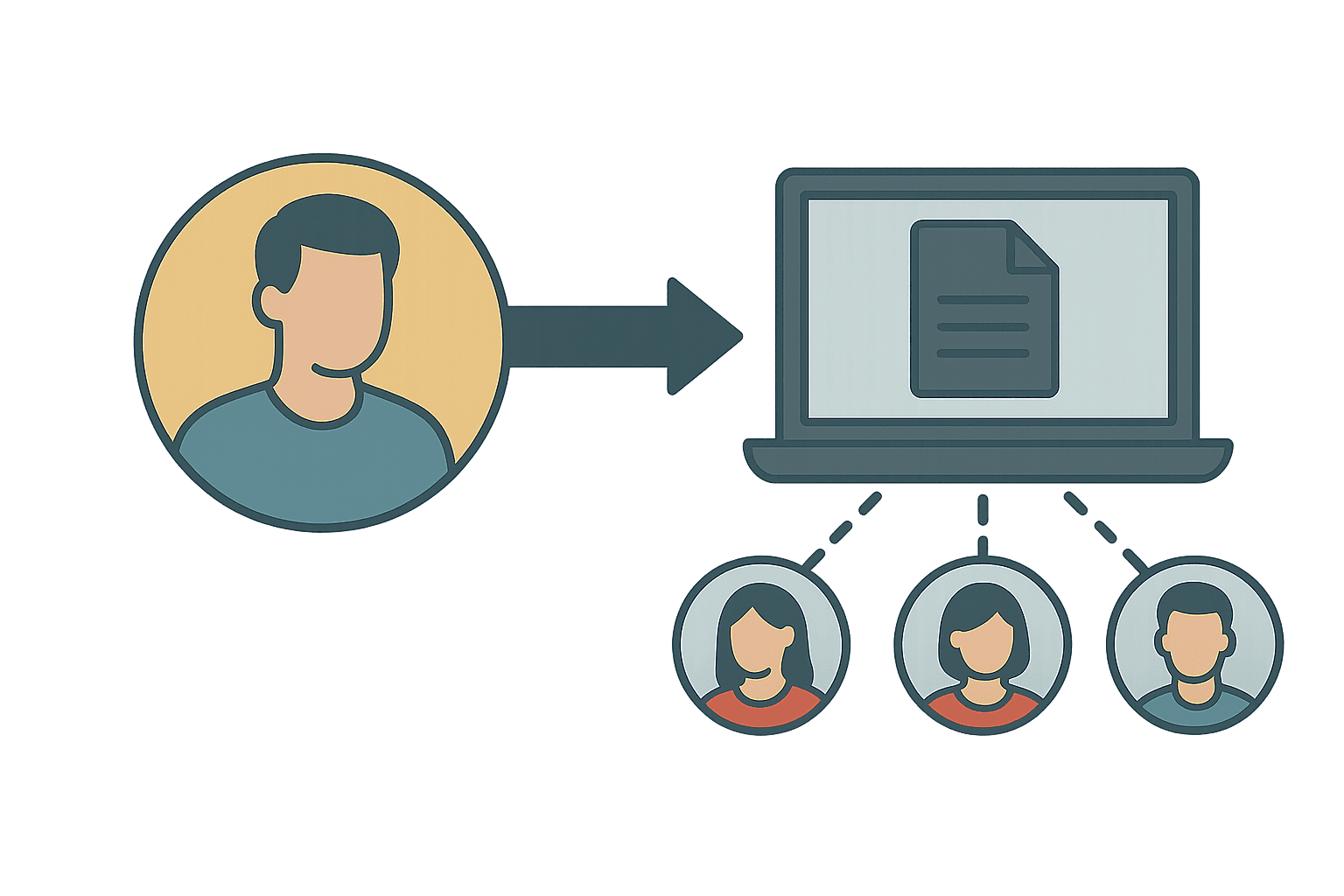
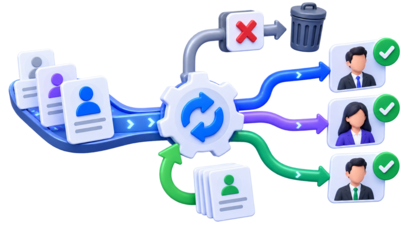
Lead distribution is the automated process of taking an incoming lead, validating it, deciding who should receive it, and delivering it there within seconds. “Who” might be a sales rep, a branch office, a partner, or — if you sell leads — the buyer willing to pay most for it right now.
The reason it matters is timing. Research published in Harvard Business Review found that companies contacting a lead within the first hour were roughly seven times more likely to qualify it than those responding later, and around sixty times more likely than those waiting a day or more. The same audit of 2,241 US companies found an average response time of 42 hours, with 23% never responding at all. Manual assignment — a manager reviewing a queue each morning — sits on the wrong side of that curve by design.
Two audiences use this software for different reasons. Sales organisations use it to assign inbound enquiries fairly and fast across a team. Lead generators and networks use it to sell each lead to the buyer who values it most, in real time. The mechanics overlap; the economics do not.
Lead Distribution vs Lead Routing vs Lead Management
These three terms get used interchangeably and mean different things. The distinction matters when you are comparing products, because vendors position against whichever term their feature set fits.
| Lead routing | Lead distribution | Lead management | |
|---|---|---|---|
| Scope | The decision: which rule sends this lead where | The full pipeline: capture, validate, route, deliver, reconcile | Everything after delivery: nurture, scoring, pipeline |
| Time horizon | Milliseconds | Seconds to minutes | Days to months |
| Typical owner | Sales ops / RevOps | Lead ops / affiliate manager | Marketing / sales |
| Lives in | CRM natively, or a dedicated layer | A dedicated platform | CRM / marketing automation |
| Handles selling leads? | No | Yes — ping-post, buyer caps, revenue reconciliation | No |
Practical rule: if you assign leads inside one company, native CRM routing may be enough. If you sell leads, work with external buyers, or run multiple sources with different quality profiles, you need a distribution layer.
How Lead Distribution Works, Step by Step
- Capture. The lead arrives via form post, API, webhook, call tracking or file upload. Source, timestamp and consent state are recorded at this moment — reconstructing them later is impossible.
- Validation. Format checks, phone and email verification, duplicate detection against recent submissions, and fraud signals. Anything failing here should never reach a buyer or a rep.
- Enrichment and scoring. Append missing data, apply a quality score based on source history and lead attributes.
- Routing decision. Rules evaluate geography, vertical, buyer caps, working hours, rep availability and score to select a destination — or run an auction.
- Delivery. API post, CRM record creation, webhook, email, SMS or dialer injection, with retry logic if the endpoint fails.
- Postback and reconciliation. The receiving system reports acceptance, rejection or conversion back. Without this loop you cannot measure buyer acceptance rate, and you are flying blind on quality.
Step 6 is where most homegrown systems stop, and it is the step that turns distribution from a delivery mechanism into a feedback loop. Sources that produce rejected leads should automatically drop in priority.
Lead Routing Methods Explained
Round-robin
Leads cycle through recipients in order, one each. Simple, transparent, and easy to defend internally because nobody can claim favouritism. The weakness is that it ignores performance entirely: your best closer and your newest hire receive identical volume. Best for teams of comparable ability, or as a starting configuration before you have performance data.
Weighted distribution
Recipients receive a share proportional to a weight — usually conversion rate, capacity, or contract value. A rep converting at twice the average gets twice the leads. It maximises revenue but concentrates risk: if your top performer leaves, a large share of your pipeline needs rehoming. Review weights monthly rather than setting them once.
Shotgun (broadcast)
The lead goes to several recipients simultaneously; whoever contacts first keeps it. Produces the fastest response times of any method and the worst internal politics. Common in insurance and home services, rare inside a single sales team.
Exclusive vs shared
An exclusive lead is sold once, to one buyer, at a premium. A shared lead goes to several buyers at a lower unit price. Shared leads generate more revenue per lead in aggregate but produce a worse consumer experience — four companies calling one person — and higher complaint and refund rates. Some verticals prohibit sharing outright.
Geographic and skill-based
Routing by territory, language, licence coverage or product specialisation. Essential in regulated verticals where a rep may only sell into states or countries they are licensed for — here the routing layer is a compliance control, not an optimisation.
Ping-post
A real-time auction: buyers bid on partial lead data, and the winner receives the full record. It produces the highest revenue per lead of any method and is covered in detail below.
Ping-Post: How Lead Auctions Actually Work
Ping-post is a two-stage protocol for selling a lead to the buyer who values it most. It exists because buyers will not commit to a price without seeing something, and sellers will not hand over a full record without a commitment.
The sequence:
- Ping. The seller sends partial, non-identifying data to multiple buyers simultaneously — vertical, zip code, loan amount, credit band, consent status. No name, phone or email.
- Bid. Each buyer’s system evaluates the ping against its own filters and returns a price or a decline. This happens in roughly 300–800 milliseconds; buyers who time out are excluded from the round.
- Selection. The seller’s platform picks the winner — usually highest bid, sometimes weighted by the buyer’s historical acceptance rate, because a high bidder who rejects half of what they buy is worth less than their headline price.
- Post. The full record is delivered to the winning buyer, who returns an accept or reject response.
- Fallback. If the winner rejects, the platform posts to the next bidder down the stack rather than losing the lead entirely.
Three things make ping-post harder than it looks. The timing budget is unforgiving: the whole cycle must finish before the consumer leaves the page, so slow buyers must be dropped automatically rather than waited for. Buyer acceptance rate has to feed back into bid ranking, or you optimise for promises rather than payments. And every ping must carry consent state, because a buyer relying on your consent record inherits your compliance exposure.
Ping-post suits sellers with at least three or four integrated buyers in a vertical. Below that, the auction has no competitive tension and a simple waterfall — offer to buyer A, then B, then C — delivers similar revenue with far less engineering.
Manual vs Automated Distribution
| Dimension | Manual | Automated |
|---|---|---|
| Time to assignment | Hours to next business day | Under a second |
| Out-of-hours leads | Wait until morning | Routed to on-call, overflow buyer or SMS sequence |
| Duplicate detection | Spotted by memory, inconsistently | Automatic against a defined window |
| Audit trail | Spreadsheet history at best | Every decision logged with the rule version applied |
| Scaling cost | Linear — more volume needs more people | Flat within a tier |
| Where it still wins | Very low volume, high-value enterprise deals | Everything above roughly 100 leads a month |
Platform Comparison: Who Does What
Products in this space split into three groups that are often compared as though they were one: lead-selling platforms built for ping-post, CRM-native routing tools, and RevOps routing layers that sit on top of Salesforce. Buying from the wrong group is the most common mistake in this category.
| Platform | Built for | Ping-post | Main limitation |
|---|---|---|---|
| LeadExec (ClickPoint) | Lead sellers and buyers, call routing | Yes | Interface depth comes with a learning curve |
| boberdoo | Lead distribution businesses | Yes | Narrow fit outside lead-selling use cases |
| Phonexa | Performance marketing suite (calls + leads) | Yes | Broad suite — you pay for modules you may not use |
| LeadsPedia | Lead and call distribution, affiliate tracking | Yes | Setup complexity for smaller operations |
| Ping Tree Systems | Ping-tree operators specifically | Yes — core function | Little value if you are not running auctions |
| CAKE | Affiliate networks and lead gen | Yes | Legacy interface relative to newer entrants |
| Default | Inbound B2B routing and scheduling | No | Not designed for selling leads to external buyers |
| Chili Piper | Inbound scheduling and rep handoff | No | Routing is a feature of the booking flow, not a standalone engine |
| LeadAngel · Traction Complete | Salesforce-native routing and matching | No | Tied to Salesforce; limited use elsewhere |
| Pipedrive · monday CRM | Small sales teams, CRM-native assignment | No | Basic rules only; no buyer caps or auctions |
| iRev | Affiliate networks and advertisers running both partner programs and lead flow | Yes | Built around affiliate and performance use cases — a pure inbound B2B sales team will find CRM-native routing simpler |
Pick the group first, the product second. If you need buyer caps, revenue reconciliation and auctions, a Salesforce routing app cannot be configured into that shape at any price — and if you route inbound demos to five reps, a ping-post platform is overbuilt for the job.
Integrations: Fitting Into Your Stack
- Salesforce. Native assignment rules handle territory and round-robin adequately. They struggle with capacity limits, working-hours logic and anything involving external buyers. A distribution layer typically writes the finished assignment into Salesforce rather than competing with it.
- HubSpot. Workflow-based rotation covers simple team assignment. Weighted distribution and buyer-side logic need an external engine posting into HubSpot via API.
- Dynamics 365. Assignment rules exist but are rigid; most implementations route outside and sync records back.
- Dialers and contact centres. Direct injection into the dialer queue is what actually delivers speed-to-lead. Routing that ends at a CRM record still waits for someone to open it.
- Webhooks and Zapier. Fine for low volume and for notifications. Not suitable as the primary delivery path at scale: no retry guarantees, no ordering, no idempotency.
Metrics and KPIs to Track
- Speed to lead — time from capture to first contact attempt, measured as a distribution rather than an average;
- Lead-to-contact rate — share of leads reached at all;
- Buyer acceptance rate — share of delivered leads accepted rather than returned, by source and by buyer;
- Revenue per lead — the metric ping-post exists to raise;
- Duplicate rate by source — rising duplicates usually mean a source is recycling;
- Delivery failure rate — posts that never landed, which silently destroy revenue;
- SLA breach rate — leads not actioned within the agreed window;
- Return and refund rate — the buyer-side signal that quality is slipping before revenue shows it.
The ROI Math
The case for automation rests on one variable: what share of leads currently go uncontacted or contacted late. Work it out for your own numbers rather than trusting a vendor’s example.
Recovered revenue = Leads/month × (New contact rate − Current contact rate) × Close rate × Average deal value
Payback in months = Platform cost ÷ Recovered monthly revenue
A worked example: 4,000 leads a month, contact rate rising from 55% to 70% after routing is automated, a 12% close rate and a $900 average deal. That is 4,000 × 0.15 × 0.12 × $900 = $64,800 of recovered monthly revenue. Against a platform cost in the low thousands, payback lands inside the first month — provided the contact-rate improvement is real. Model it with your own conservative estimate of that lift, because it is the only number in the formula that is genuinely uncertain.
Compliance: TCPA, GDPR and CCPA
Distribution is where compliance obligations are either enforced or lost, because it is the moment personal data moves to a third party. Three regimes matter for most operators.
TCPA (United States)
Governs calls and texts to consumers. Prior express written consent must be captured at the point of submission, stored with the exact disclosure text, timestamp, IP and the page URL, and passed to whoever contacts the consumer. Scrub against the National Do Not Call Registry on the schedule your counsel specifies. Statutory damages accrue per call or text, which is why volume businesses treat this as an existential rather than administrative risk. Current rules and enforcement guidance are published by the FCC.
GDPR (European Union and UK)
Requires a lawful basis for processing and for onward transfer. Selling or sharing a lead with a buyer the consumer was never told about is the classic failure. Name the categories of recipient at collection, honour deletion requests across every downstream buyer, and keep transfers documented. The UK regulator, the ICO, publishes guidance on direct marketing and data sharing specifically.
CCPA / CPRA (California)
Treats much lead selling as a “sale” or “sharing” of personal information, which triggers opt-out rights and disclosure obligations. Your platform must be able to suppress a consumer across all future distribution once they opt out. Guidance is published by the California Attorney General.
This section is informational and not legal advice — confirm current obligations with qualified counsel in each market you operate in. What the platform must provide is mechanism: consent capture stored immutably, suppression lists applied before routing, and an audit trail showing which buyer received which record under which consent.
Pricing Models
- Per lead processed — scales directly with volume; predictable per unit, unpredictable per month;
- Flat subscription by tier — banded by volume or seats; easiest to budget;
- Per seat or per buyer — cost rises with the number of destinations rather than lead volume;
- Percentage of lead revenue — aligns vendor and seller, but expensive once volume is established.
Costs that rarely appear in the first quote: buyer integrations beyond a bundled allowance, call routing as a separate module, historical data migration, and support tiers with response-time SLAs. Ask for total cost at twelve-month projected volume, not a monthly headline.
Common Mistakes to Avoid
- Routing before validating. Delivering junk fast destroys buyer relationships faster than delivering slowly;
- No fallback path. When the primary destination fails, the lead must go somewhere — silent drops are pure lost revenue;
- Ignoring buyer acceptance rate. Ranking buyers by bid alone rewards those who reject most of what they win;
- Consent not travelling with the lead. The buyer calls, the complaint lands on you;
- Setting weights once. Performance shifts quarterly; static weights slowly misallocate your best leads;
- No postback loop. Without acceptance data flowing back, source quality is invisible until the money is gone;
- Treating out-of-hours as an edge case. A large share of consumer leads arrive when nobody is staffed.
Implementation Checklist
- Map every current lead source and its delivery format
- Document the routing rules that exist today, including the informal ones
- Define validation criteria and what happens to a failing lead
- Set the duplicate window per vertical
- Choose the routing method per source, not one method globally
- Configure buyer or rep caps and working-hours logic
- Build the fallback chain for every primary destination
- Wire consent capture and confirm it passes downstream
- Apply suppression and DNC lists before routing, not after
- Test end to end in a sandbox with real payload shapes
- Set alerts on delivery failures and SLA breaches
- Run parallel with the old process for one full cycle and reconcile
Cases from Practice
Financial services broker — [X] leads/month
Before: [speed to lead, contact rate]. Configured: [validation, weighted routing, dialer injection]. After: [contact rate, revenue per lead]. Time to result: [weeks].
Lead network moving to ping-post — [X] buyers integrated
Before: [fixed-price waterfall, revenue per lead]. Configured: [ping-post with acceptance-weighted ranking]. After: [revenue per lead, buyer acceptance rate]. Time to result: [weeks].
Glossary
- Ping — partial, non-identifying lead data sent to buyers to solicit a bid.
- Post — delivery of the full lead record to the winning buyer.
- Shotgun — sending one lead to several recipients at once; first to respond wins.
- Exclusive lead — sold to a single buyer, at a premium.
- Buyer acceptance rate — share of delivered leads a buyer accepts rather than returns.
- Recycle queue — leads returned or unworked, re-entering distribution.
- SLA breach — a lead not actioned within the agreed response window.
- Postback — server-to-server callback reporting acceptance or conversion.
- Lead leakage — leads lost between capture and delivery through failures or silent drops.
Definitions for these and around a hundred adjacent terms are in the affiliate marketing glossary.
FAQ
[1] What is ping post?
A two-stage lead auction. The seller sends partial data (“ping”) to several buyers, each returns a bid or a decline within roughly 300–800 milliseconds, and the full record is delivered (“post”) to the winner. If the winner rejects it, the platform posts to the next bidder down.
[2] What is lead routing?
The rules engine that decides which rep, office or buyer receives a given lead — based on geography, capacity, availability, score or bid. Routing is the decision; distribution is the whole process around it, including validation, delivery and reconciliation.
[3] How do I set up round-robin lead distribution?
Define the recipient pool, set the order, and decide three things most implementations forget: what happens when a recipient is unavailable, whether the rotation resets daily or continues, and whether caps apply. Then test with real payloads before going live — round-robin fails quietly when one recipient’s endpoint is down.
[4] Is there free or open-source lead distribution software?
Basic routing is included free in most CRMs, which covers simple internal assignment. Open-source options exist but require you to build validation, compliance logging and buyer integrations yourself — the parts that carry real risk. For lead-selling operations, the cost of getting consent logging wrong exceeds any licence saving.
[5] How fast do I actually need to be?
Faster than an hour, and preferably within minutes. Harvard Business Review’s audit found firms contacting within the first hour were about 7× more likely to qualify a lead than those responding later. The widely quoted five-minute and 100× figures come from a separate MIT/InsideSales study, not from HBR — worth knowing if you are citing them in a deck.
[6] Does my CRM already do this?
For assigning inbound enquiries across a team, usually yes. For buyer caps, auctions, revenue reconciliation, or routing across external companies, no — CRMs model an internal pipeline, not a marketplace.
[7] Exclusive or shared leads — which is better?
Shared leads generate more revenue per lead for the seller; exclusive leads convert better for the buyer and produce fewer complaints. Sellers running both typically price exclusivity at a multiple of the shared rate and reserve it for buyers who commit to volume.
[8] How long does implementation take?
Two to six weeks in most cases. Configuring rules takes days; integrating each buyer or CRM endpoint and testing payload shapes takes the rest. Run parallel with your existing process for one full cycle before switching over.
[9] What is a good buyer acceptance rate?
Compare against your own baseline per vertical rather than a universal figure. What matters is the trend and the spread: a source whose acceptance rate is drifting down, or a buyer whose rate sits far below peers on the same source, is the signal worth acting on.
[10] Who is responsible for TCPA compliance — the seller or the buyer?
In practice both carry exposure: the buyer makes the call, but relies on the consent the seller captured. This is why consent records must travel with the lead and be reproducible on demand. Confirm the allocation of liability in your buyer agreements with counsel.
Become a champion with irev
[Only 9 slots left this month]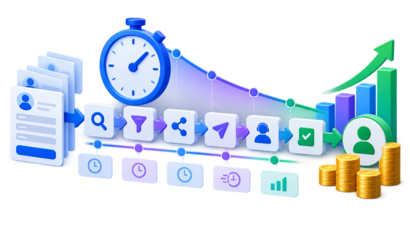
Irev puts your partner program on the fast track to real growth


 SIGMA Award Winner
Best marketing solution provider
SIGMA Award Winner
Best marketing solution provider