
Why Lead Quality Matters More Than Quantity

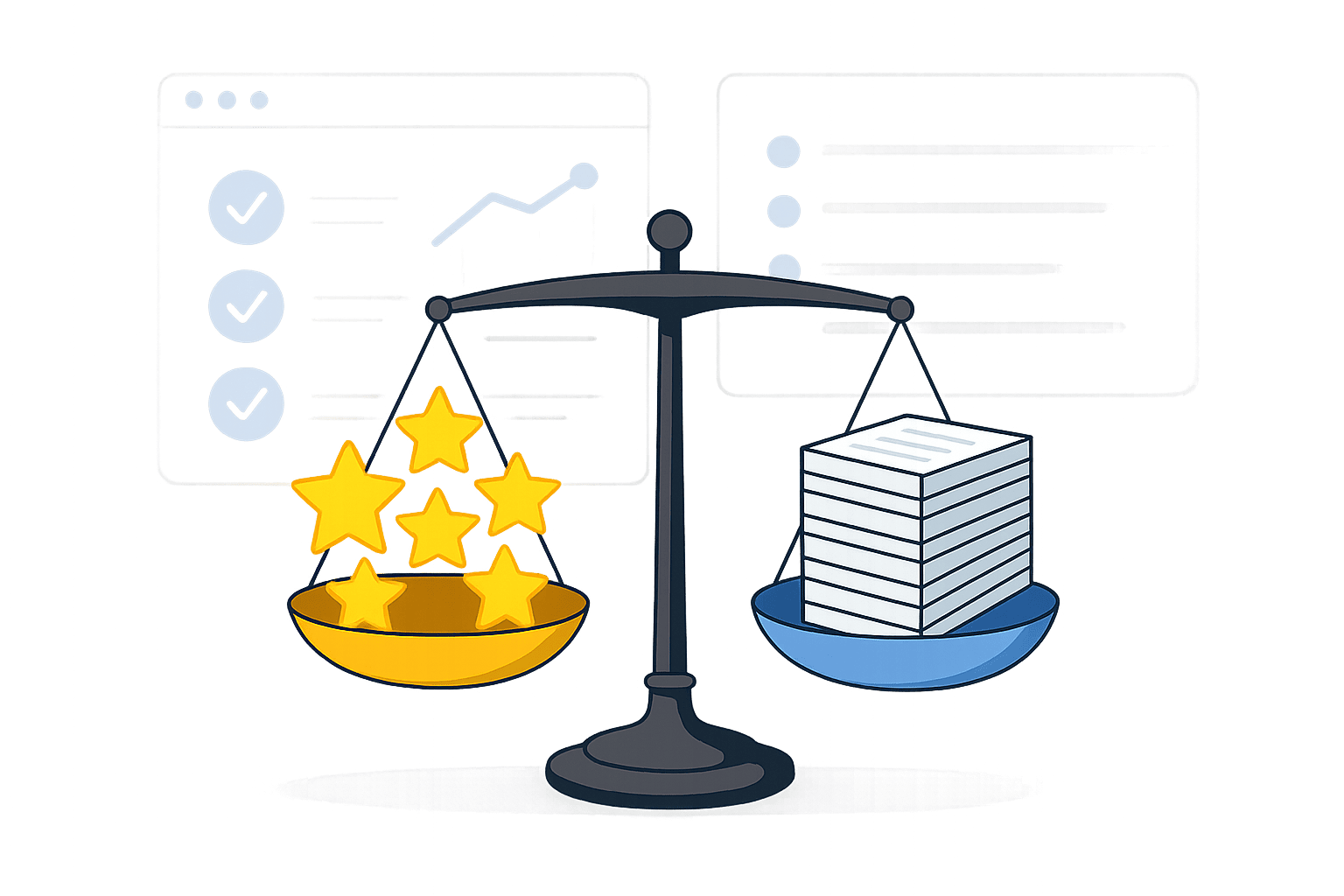
Lead quality refers to how likely a prospect is to convert into a paying customer, while lead quantity is simply the total number of leads generated. In 2026, businesses that prioritize quality over volume see up to 5x higher conversion rates and 30–40% lower customer acquisition costs.
What is lead quality?
Lead quality is a measure of how likely a prospect is to convert into a paying customer, based on two dimensions: fit (alignment with your Ideal Customer Profile) and intent (behavioral signals of buying readiness). High-quality leads convert at 5–15× the rate of low-quality leads and cost 30–40% less to acquire over time.
In the era of data-driven marketing, businesses often measure success by the number of leads generated. However, the true metric of performance lies not in the volume of leads but in their conversion potential. The modern approach, supported by affiliate marketing management services, focuses on identifying high-intent prospects who demonstrate real interest and buying readiness rather than merely increasing lead counts. A smaller pool of qualified leads can yield higher ROI, stronger customer retention, and a more predictable sales cycle.
This article examines why lead quality outweighs quantity in long-term business success. It explores how data analytics, lead scoring, and interdepartmental collaboration contribute to better conversion rates, efficient resource allocation, and measurable growth. By understanding the principles of quality-based lead management, companies can align their marketing and sales efforts with profitability rather than vanity metrics.
Key Takeaways
- 100 leads at a 15% conversion rate beat 1,000 leads at 1% — 50% more customers, 90% less sales time wasted.
- Low-quality leads inflate CAC by 2–4x and slow down sales velocity.
- Lead scoring + ICP + BANT = the three-pillar quality framework used by top B2B teams.
- In regulated niches (iGaming, finance), low-quality leads create compliance risk, not just wasted spend.
| Dimension | Lead Quantity approach | Lead Quality approach |
|---|---|---|
| Primary metric | Total leads / CPL | Conversion rate / CLV / SQL rate |
| Top-of-funnel volume | High (wide net) | Moderate (targeted) |
| Sales team load | Overwhelmed, low win-rate | Focused, high win-rate |
| CAC trend | Rises over time | Declines with data maturity |
| Best for | Brand awareness, low-ticket | B2B SaaS, iGaming, high-ticket |
| Risk | Wasted spend, compliance issues | Missed revenue if too narrow |
Understanding Lead Quality vs. Lead Quantity
Lead quality represents the probability that a potential customer will convert into a paying client. These leads meet predefined criteria such as budget, authority, need, and timeline (BANT), making them strategically valuable. Quantity-driven campaigns, on the other hand, focus on generating large volumes of leads without assessing their intent or fit — often resulting in resource wastage and low conversion rates.
A practical example: a campaign producing 1,000 leads with a 2% conversion rate may deliver fewer actual customers than one generating 200 leads at 15% conversion. Focusing on quality over volume ensures higher marketing efficiency and better alignment between acquisition cost and lifetime customer value. Companies that master this balance achieve stronger ROI and consistent revenue growth.
The Hidden Costs of Low-Quality Leads
Low-quality leads create hidden operational and financial costs that erode profitability. Sales teams waste hours qualifying unfit prospects, marketing budgets are misallocated to non-performing channels, and data integrity suffers. Over time, this misalignment leads to inflated acquisition costs and declining morale among sales representatives.
The consequences of poor lead quality extend beyond lost sales opportunities. When marketing communications reach irrelevant audiences, brand reputation can decline due to perceived spam or misrepresentation. In regulated industries like iGaming or finance, low-quality leads may also trigger compliance issues, increasing legal and reputational risks.
Comparison of lead quality impact:
| Category | Low-Quality Leads | High-Quality Leads |
|---|---|---|
| Conversion Rate | Low (1–3%) | High (10–25%) |
| Sales Cycle Length | Extended and unpredictable | Shorter and structured |
| Customer Lifetime Value | Minimal or negative | High recurring value |
| Operational Efficiency | High workload, low return | Optimized and measurable |
| Compliance Risk | Elevated | Controlled and compliant |
Defining Your Ideal Customer Profile (ICP) — The Foundation of Quality
What is an Ideal Customer Profile (ICP)?
An Ideal Customer Profile is a documented description of the company and decision-maker most likely to buy, retain, and expand with your product. A B2B ICP typically includes firmographics (industry, size, geography), buyer persona details (role, KPIs), triggering events (funding, leadership changes), and explicit disqualifiers. Without an ICP, lead quality cannot be defined — every lead looks the same.
Lead quality doesn’t exist in a vacuum — it’s defined relative to your Ideal Customer Profile (ICP). An ICP is a documented description of the company and decision-maker most likely to buy, stay, and expand. Without a clear ICP, every lead looks the same on a dashboard.
A strong B2B ICP typically includes:
- Firmographics — industry vertical, company size, revenue band, geography, tech stack
- Buyer persona — job title, department, seniority, KPIs they own
- Triggering events — funding round, new leadership, compliance deadline, tech migration
- Pain signals — specific problems your product solves, not generic “efficiency”
- Disqualifiers — deal-breakers that save you from tire-kickers (too small, wrong region, regulated out)
For affiliate and iGaming operators, add: traffic geo distribution, preferred payout model (CPA/RevShare/Hybrid), and compliance jurisdiction fit.
MQL vs SQL: The Handoff That Makes or Breaks Quality
What is an MQL?
A Marketing Qualified Lead (MQL) is a prospect whose behavior signals interest — they downloaded a guide, attended a webinar, or requested a demo — but who has not yet been verified by sales for fit and buying readiness. MQLs sit in marketing’s hands until they cross a defined scoring threshold.
What is an SQL?
A Sales Qualified Lead (SQL) is an MQL that sales has verified as a genuine opportunity: right ICP fit, real need, available budget, and a defined timeline. SQLs trigger sales outreach within minutes, not days. A healthy MQL-to-SQL conversion rate of 15% or higher is the clearest single indicator that your top-of-funnel quality is intact.
A Marketing Qualified Lead (MQL) is a prospect whose behavior signals interest — they downloaded a guide, attended a webinar, or requested a demo, but haven’t yet been vetted for fit and readiness. A Sales Qualified Lead (SQL) has been verified by sales as a genuine opportunity: right fit, right budget, right timing.
The MQL-to-SQL conversion rate is the single clearest diagnostic of lead quality. Benchmarks by channel:
| Channel | Typical MQL→SQL % | Quality signal |
|---|---|---|
| Organic search / SEO | 35–50% | High intent |
| Referral / partner | 40–60% | Pre-qualified by trust |
| Paid search | 20–30% | Intent varies by keyword |
| Paid social | 10–20% | Volume channel, low intent |
| Content syndication | 5–15% | Low intent, high volume |
| Affiliate (quality-controlled) | 25–45% | Depends on partner vetting |
If your MQL→SQL rate sits below 15% across the board, the problem is quality, not volume. Adding more leads on top of a leaky qualification process compounds the cost.
Lead Scoring: A Template You Can Copy
What is lead scoring?
Lead scoring is a ranking method that assigns points to prospects based on how closely they match your Ideal Customer Profile (fit) and how engaged they are with your content (intent). When a lead crosses a defined threshold, it is passed from marketing to sales as an SQL. Lead scoring turns subjective ‘good lead’ judgments into a repeatable, auditable process.
Lead scoring assigns points to leads based on how closely they match your ICP (fit) and how engaged they are (intent). When a lead crosses a threshold, it becomes an SQL and hits sales. Here is a practical starting template — adjust weights to your business.
Demographic / fit criteria (max 50 points)
| Attribute | Match condition | Points |
|---|---|---|
| Industry fit | Matches ICP | +15 |
| Company size (employees) | Within target range | +10 |
| Job title / seniority | Decision-maker / influencer | +15 |
| Country / region | Primary market | +10 |
| Competitor or free email domain | Disqualifier | -20 |
Behavioral / intent criteria (max 50 points)
| Activity | Recency | Points |
|---|---|---|
| Requested a demo | <14 days | +25 |
| Viewed pricing page | <14 days | +15 |
| Downloaded a case study | <30 days | +10 |
| Opened 3+ emails in a sequence | <30 days | +5 |
| Inactive > 90 days | Cool-down | -10 |
Thresholds (adjust to your conversion data)
- 0–29 points — Nurture (marketing-owned, automated sequence)
- 30–59 points — MQL (warm, assign SDR)
- 60–100+ points — SQL (pass to AE, respond within 5 minutes)
BANT Framework
What is BANT?
BANT is a lead qualification framework that scores prospects on four criteria: Budget (do they have funds allocated?), Authority (are they a decision-maker?), Need (is there a real problem to solve?), and Timeline (when will they decide?). Modern BANT is flexible — three of four strong signals are usually enough to qualify a lead. Pair it with behavioral scoring for a complete picture.
BANT is a lead qualification framework that checks four criteria before a prospect becomes an SQL:
- Budget — does the prospect have funds allocated or access to a budget holder? Sample question: “What does your team typically invest in solutions like this?”
- Authority — is the contact a decision-maker, influencer, or end-user? Sample question: “Who else will weigh in on this decision?”
- Need — is there a real, urgent problem your product solves? Sample question: “What happens if this problem stays unsolved for another quarter?”
- Timeline — when will they decide and deploy? Sample question: “What’s driving the timeline — is there a deadline or external pressure?”
Modern BANT is flexible: if 3 of 4 are strong, the lead is still qualified. Rigidly rejecting on one missing element kills otherwise-good opportunities. Pair BANT with behavioral scoring for a fuller picture.
BANT vs MEDDIC vs CHAMP — choosing the right framework
| Framework | BANT | MEDDIC | CHAMP |
|---|---|---|---|
| Stands for | Budget · Authority · Need · Timeline | Metrics · Economic buyer · Decision criteria · Decision process · Identify pain · Champion | Challenges · Authority · Money · Prioritization |
| Best for | SMB, transactional deals | Enterprise, complex cycles | Modern SaaS, consultative |
| Strength | Simple, fast | Deep, deal-specific | Pain-first ordering |
| Weakness | Rigid if used alone | Time-heavy | Less measurable |
| When to use in iRev | Small affiliates, short cycles | Tier-1 iGaming operators | Hybrid partner deals |
Common Mistakes That Silently Kill Lead Quality
Most quality problems aren’t caused by bad campaigns — they’re caused by invisible, repeatable process failures. The most common:
- Chasing cost per lead as a primary KPI. Low CPL rewards volume channels that produce low-intent leads. Track cost per SQL or cost per opportunity instead.
- No shared definition of “qualified.” If marketing and sales disagree on what an SQL is, every handoff breeds friction. Fix with a written SLA.
- Forms that ask too little or too much. Five fields is the common sweet spot for B2B — enough to qualify, not enough to scare away.
- Running paid traffic without a disqualification layer. Every paid campaign needs a “who this is NOT for” filter — usually a qualification question or an ICP check on submit.
- Ignoring affiliate traffic sources. A partner bringing 10,000 leads that convert at 0.1% is a liability, not an asset. Scoring partners by SQL-rate, not lead-count, fixes this.
- No lead decay. A lead that hasn’t engaged in 180 days is not the same asset as one that downloaded a case study last week. Add time-decay to your scoring.
💡 How iRev protects you from the low-CPL trap
iRev’s automated partner scoring ranks every affiliate by SQL rate, FTD rate, and complaint rate — not by lead volume. Low-quality sources are throttled before they burn budget. You stop paying for noise.
When Quantity Actually Matters (The Honest Balance)
A quality-first mindset shouldn’t flip into volume-phobia. There are real scenarios where wider top-of-funnel is the right call:
- Early-stage product, unclear ICP. If you don’t yet know who your best customers are, narrowing too early is guessing. Volume exposes signal.
- High-velocity, low-ticket SaaS. Self-serve, product-led growth models depend on volume — qualification happens inside the product, not before.
- Brand awareness campaigns. TOFU content isn’t a conversion vehicle; it’s a pipeline investment.
- Re-engagement of dormant lists. Volume matters to reopen a cold database and discover who’s still active.
The mature answer isn’t “quality over quantity” — it’s “quality of the right quantity, at the right stage of the funnel.” See also: handling high-volume traffic.
Lead Quality in iGaming and Affiliate-Driven Programs
In regulated niches like iGaming, crypto, and fintech, low-quality leads are more than wasted spend — they are regulatory exposure. A single compliance breach (underage sign-up, self-excluded player, restricted-jurisdiction traffic) can trigger fines, license reviews, or loss of payment processing.
Quality controls specific to iGaming affiliate programs:
- Traffic source verification — every affiliate partner declares allowed geos, traffic types, and creatives before traffic goes live
- KYC-ready lead data — leads arrive with the fields needed for Know Your Customer checks, not just an email
- FTD (First-Time Deposit) tracking, not just sign-ups — the only honest quality metric in this space
- Automated partner scoring — affiliates ranked by FTD rate, retention, and complaint rate, with low performers throttled
- Lead distribution logic — the same lead from the same source can be high-quality for operator A and disqualified for operator B, based on geo and product fit
Platforms like iRev’s Partner Platform and Lead Distribution modules bake these controls into the workflow so compliance isn’t a manual safety net but a default state.
Lead Quality in Other Regulated Verticals
Lead Quality in Finance and Fintech
In lending, brokerage, and insurance, low-quality leads create three problems at once: regulatory exposure (KYC/AML failures), wasted underwriting capacity, and inflated CPL on already-expensive paid channels (insurance keywords routinely cost $40–$60+ CPC in 2026). A single non-compliant lead can trigger a regulator inquiry that costs more than a quarter’s marketing budget.
Quality controls specific to financial offers:
- Pre-qualification on landing pages — credit-tier, employment status, debt-to-income range — before form submit, not after
- Source-level segregation — display, native, push, and search each have wildly different intent profiles and must be scored separately
- Real-time data validation APIs — email deliverability, phone validity, IP-to-geo consistency check
- Compliance flags by jurisdiction (CFPB in the US, FCA in the UK, MiFID II in the EU) embedded directly in lead-distribution rules
- Conversion event = funded application or paid policy, never just sign-up. Anyone tracking sign-ups in fintech is measuring the wrong thing.
Lead Quality in E-commerce and Subscription Brands
E-commerce flips the classic B2B definition: a ‘lead’ is usually an email subscriber, an abandoned-cart recoverer, or a first-time buyer. Quality is measured by 90-day repeat purchase rate and average order value (AOV) — not form fills or even first sales.
What separates a quality e-com lead from noise:
- Source intent — paid social vs. branded search vs. influencer traffic behaves 4–10× differently on LTV, even at identical CPL
- Discount-dependency — leads acquired only via 30%+ off codes rarely repurchase at full price; their CLV is structurally lower
- Channel preference signals — an SMS opt-in is materially more valuable than email-only in 2026 (60–70% higher engagement)
- Bot and fraud filtering — up to 15% of paid social sign-ups in 2026 are non-human; an unfiltered list is not a quality asset
- First-purchase context — full-price first orders predict retention; coupon-rescued carts often do not
Key Metrics That Define Lead Quality
To evaluate lead quality accurately, affiliate managers and marketing professionals must rely on measurable indicators that reflect engagement, conversion potential, and long-term value. These metrics establish a data foundation for objective decision-making and continuous optimization.
The most reliable indicators include conversion rate, lead-to-customer ratio, average deal size, engagement level, and customer lifetime value (CLV). By tracking these parameters across campaigns, marketers can distinguish between effective channels and those generating low-value traffic.
Key performance metrics include:
- Lead-to-Customer Ratio – Percentage of leads that become paying customers.
- Conversion Rate – Proportion of leads performing the desired action (e.g., deposit, subscription).
- Customer Lifetime Value (CLV) – Estimated total revenue generated by a customer over time.
- Engagement Metrics – Email open rate, click-through rate, and time spent on page.
- Lead Source Credibility – Validated origins of traffic, ensuring authenticity and compliance.
How to Improve Lead Quality
Improving lead quality requires a strategic approach that combines data analytics, refined targeting, and interdepartmental alignment. Companies should analyze historical data to identify high-converting customer profiles and optimize acquisition channels based on that intelligence.
Marketing teams can refine ad targeting and messaging to attract leads with stronger intent, while sales departments should provide real-time feedback on lead suitability. Lead nurturing campaigns that educate and qualify prospects through automated workflows further enhance conversion potential. See also: B2B customer acquisition strategies.
Actionable steps for improving lead quality:
- Define ideal customer personas using demographic and behavioral data.
- Refine ad targeting and content strategy based on conversion insights.
- Implement lead scoring systems in CRM to prioritize engagement-ready prospects.
- Integrate marketing automation tools to pre-qualify leads through behavior tracking.
- Ensure regular communication between marketing and sales to refine qualification criteria.
The Role of Technology in Lead Qualification
AI and Predictive Scoring: Beyond Static Rules
Modern lead scoring blends two layers. Rules-based scoring uses manually assigned weights — transparent, easy to audit, but blind to subtle predictors. Predictive scoring uses machine-learning models trained on your historical closed-won and closed-lost data to estimate conversion probability. Each lead is scored not by what a marketer thinks matters, but by what actually predicted revenue in your past pipeline.
What predictive models look at in 2026:
- First-party signals — site visits, content depth, return frequency, demo requests
- Third-party intent — category visits on review sites (G2, Capterra), job board postings indicating tool adoption
- Contextual data — technographics (what stack they run), funding events, leadership changes, expansion signals
Two warnings:
- Cold-start problem — a predictive model needs 200+ closed-won examples before it outperforms rules. New programs should start with rules and graduate.
- Explainability matters — in regulated verticals (finance, iGaming, healthcare), a black-box rejection creates legal exposure. Use models that surface the top 3 factors behind each score.
CRM systems, integrated with automation platforms and data enrichment APIs, ensure that only verified, high-intent leads enter the sales pipeline. By synchronizing data across marketing, sales, and analytics systems, companies reduce redundancy and maintain a clean, compliant database. This enables faster response times and increased sales productivity.
Technology solutions for lead qualification:
- AI-based lead scoring engines for predictive analytics.
- CRM platforms integrated with automation and marketing intelligence tools.
- Data validation APIs for email, IP, and identity verification.
- Real-time dashboards to monitor lead engagement and conversion trends.
Aligning Marketing and Sales Teams
The alignment of marketing and sales teams is fundamental to maintaining consistent lead quality. Disconnection between departments results in mismatched expectations, redundant outreach, and wasted resources. A unified lead definition framework allows both teams to evaluate prospects through the same criteria and metrics.
Shared KPIs, regular feedback loops, and integrated CRM visibility improve the conversion process. When marketing understands which leads deliver value and sales recognizes the source of qualified traffic, both departments operate more efficiently and profitably.
Best practices for marketing and sales alignment:
- Develop a unified lead qualification framework with defined scoring criteria.
- Hold biweekly review meetings to assess campaign performance and feedback.
- Use shared CRM dashboards for transparency in lead progression.
- Incentivize collaboration by aligning team goals with conversion outcomes.
💡 How iRev closes the marketing–sales feedback loop
Shared dashboards in iRev show both teams the same numbers — MQL→SQL rate by source, closed-won by partner, time-to-first-touch by lead score. When marketing sees what actually closes and sales sees where good leads come from, alignment stops being a meeting and starts being a default.
Measuring ROI and Building a Long-Term Strategy
Lead quality directly influences return on investment (ROI) by improving conversion rates and reducing acquisition costs. Tracking ROI across campaigns helps determine which sources deliver sustainable value versus short-term spikes in volume. High-quality leads create a predictable pipeline, supporting long-term business forecasting and resource planning.
Organizations should implement continuous data review cycles to maintain accuracy. This involves auditing lead sources, refining scoring models, and adapting outreach strategies based on performance analytics. Over time, a culture of quality-focused marketing drives consistent growth and brand reputation.
Key strategic recommendations:
- Measure ROI using a combination of CLV, CAC (Customer Acquisition Cost), and retention metrics.
- Conduct quarterly audits of lead sources for quality assurance.
- Establish feedback mechanisms between teams for ongoing optimization.
- Adopt automation platforms to monitor and enhance long-term lead performance.
Privacy, Consent, and Lead Quality in 2026
In 2026, consent is no longer a legal formality — it is a quality signal. GDPR (EU), UK GDPR, the EU AI Act, India’s DPDP, and a growing patchwork of US state laws have made one thing clear: a lead without verifiable opt-in is not a low-quality lead, it is a liability. The cost of one non-compliant outreach campaign can exceed a year of clean-list marketing spend.
What this means in practice:
- Double opt-in by default for all EU and UK traffic — single opt-in inflates list size and destroys deliverability over time
- Consent metadata (timestamp, IP, exact wording of the checkbox, source URL) must travel with the lead through every downstream system — CRM, ESP, data warehouse, affiliate partner platforms
- Purpose limitation is enforceable — a lead who consented to ‘product updates’ cannot legally be enrolled in unrelated outbound campaigns
- Right-to-erasure workflows must propagate in under 30 days to every system, including external affiliate partners
- Affiliate partners are joint controllers under GDPR — your Data Processing Agreement must explicitly assign liability between operator and affiliate
Scoring impact: treat ‘verified double opt-in’ as a positive scoring factor (+10 points in the template above) and missing/unclear consent as a hard disqualifier for EU and UK traffic.
Conclusion
The modern marketplace rewards precision, not volume. Businesses that prioritize lead quality gain more predictable revenue streams, higher lifetime customer value, and stronger brand equity. Focusing on fewer, more qualified leads reduces waste and increases operational efficiency. It transforms lead generation from a numbers game into a sustainable growth strategy.
By leveraging analytics, automation, and collaboration, companies can build an intelligent lead management framework rooted in measurable quality. In doing so, they align marketing investments with long-term profitability and market resilience.
Frequently Asked Questions (FAQs)
[1] How do you measure lead quality?
Lead quality is measured with a combination of fit (does the lead match your ICP?), intent (behavioral signals like demo requests), and outcome metrics — primarily MQL-to-SQL conversion rate, SQL-to-opportunity rate, and closed-won rate by source. A lead-scoring model that assigns points to fit and intent is the most common operational tool.
[2] What is a good lead-to-customer conversion rate?
B2B averages land between 2% and 5% across all leads, but top-quartile teams hit 10–15% when quality is controlled. For SQLs specifically, a healthy close rate sits between 20% and 30%. If your numbers are below these ranges, the issue is almost always lead quality, not sales execution.
[3] Why is lead scoring important for lead quality?
Lead scoring translates subjective “good lead” judgments into a repeatable, auditable process. It ensures every lead is evaluated the same way, sales time goes to the highest-probability opportunities first, and marketing gets closed-loop feedback on which channels actually produce revenue — not just form fills.
[4] What is the 80/20 rule in lead generation?
In most B2B pipelines, roughly 20% of leads produce 80% of revenue. Identifying which segment, channel, and behavior predicts that top 20% — and concentrating budget there — is the fastest lever for improving ROI without increasing spend.
[5] Can you have too many leads?
Yes. When lead volume outpaces sales capacity, response times slow, qualification gets rushed, and the best opportunities often sit in a queue while reps chase less-qualified contacts. A functional pipeline is balanced to sales capacity, not maximized for raw count.
[6] What is a qualified lead vs an unqualified lead?
A qualified lead meets your ICP criteria and shows buying intent — they’re in your target market, have authority or access to it, and have signaled a real problem. An unqualified lead is missing one or more of those elements: wrong industry, wrong role, no budget, or no timeline.
[7] How does lead quality affect ROI in affiliate marketing?
In affiliate programs, ROI is driven by post-click events (FTDs, subscriptions, activations), not clicks. Low-quality affiliate traffic inflates gross lead counts but erodes net revenue because operators pay for leads that never monetize. Quality-controlled affiliate programs use partner scoring, geo/offer matching, and automated lead distribution to keep the economics intact.
[8] How does AI-based lead scoring differ from traditional rules-based scoring?
AI scoring uses machine-learning models trained on your historical closed-won and closed-lost data to predict conversion probability. Rules-based scoring relies on manually assigned point values for each criterion. AI catches non-obvious signal patterns — like the combination of three small behaviors that together predict a deal — but needs clean training data and explainability for regulated industries. Rules are transparent and easy to audit but miss subtle predictors. Most mature teams blend both: rules as the floor, AI as the optimizer.
[9] Does GDPR affect how I score leads?
Yes, directly. Consent metadata — timestamp, exact wording of the opt-in, source URL — is part of lead quality in 2026. A lead with verifiable double opt-in is materially more valuable than one without, and a lead with missing consent is a legal liability, not a low-quality contact. Your scoring model should treat verified consent as a positive factor and missing or unclear consent as a disqualifier for all EU and UK traffic.
[10] Is lead quality measured the same way in B2B and B2C?
No. B2B quality leans heavily on fit — Ideal Customer Profile match, account size, role authority — because buying cycles are long and contract values are high. B2C quality leans on intent and behavior because conversion happens fast and decisions are individual. In affiliate-driven verticals like iGaming, finance, and e-commerce, you get a hybrid: ‘B2C with B2B-style operator partnerships’, where partner quality directly predicts end-user quality. Score the partner, not just the lead.
[11] How often should I re-tune my lead scoring model?
Review thresholds and weights quarterly against actual closed-won data. If your win rate on SQLs (leads scoring 60+) drops more than 5 percentage points from baseline, recalibrate immediately — scoring drift is real and accelerates after market shifts, product launches, or seasonality changes. Full model rebuilds are recommended annually even when quarterly numbers look stable. Treat scoring as living infrastructure, not a one-time configuration.
Become a champion with irev
[Only 9 slots left this month]
Irev puts your partner program on the fast track to real growth


 SIGMA Award Winner
Best marketing solution provider
SIGMA Award Winner
Best marketing solution provider