
Conference Lead Routing: How to Capture, Score and Distribute Partner Leads After Event


The majority of event marketing budgets yield sub-optimal results due to systemic failures in post-conference execution. Companies often treat trade shows as top-of-funnel investments while neglecting the operational infrastructure required to process the resulting data. This “lead leakage” occurs when contacts languish in static spreadsheets, causing the initial momentum to dissipate before a sales representative initiates contact. A robust conference lead routing strategy transforms this chaotic process into a predictable pipeline.
Shifting from manual data entry to automated systems marks the difference between missed opportunities and consistent revenue growth. Organizations must treat lead management as a critical component of their overall sales stack. This guide details the methodology for implementing a high-velocity system designed to process, qualify, and assign event leads with surgical precision.
Universal Capture: Standardizing Input
Relying on manual business card entry creates bottlenecks and data inaccuracies. Digital standardization serves as the primary defense against information loss. Modern event tech stacks mandate the use of QR code scanning applications, mobile lead-capture tools, or unified digital forms that sync directly with the corporate CRM.
Effective lead capture automation requires strict adherence to standardized fields. Every interaction must record specific data points to allow for downstream processing. Organizations should implement the following protocols:
- Use designated mobile apps for scanning event badges to ensure instant digitisation.
- Enforce mandatory form fields for all captured contacts, including company name, job title, and explicit interest level.
- Eliminate paper-based collection to prevent manual transcription errors and delays.
Data Enrichment: Context is King
Raw contact information provides little utility to sales teams. Contextual data transforms a name and email address into a qualified business opportunity. Before a lead reaches a sales representative, automated systems must append firmographic and technographic data to the record.
Enrichment services integrate with your CRM to provide immediate insights into company size, industry vertical, and historical brand interactions. This data allows for precise prioritization. When the sales team receives a notification, they possess the necessary context to personalize their outreach, moving the conversation from a generic introduction to a specific value proposition immediately.
Lead Scoring: Tiering Your Prospects
Lead scoring for events eliminates the waste associated with treating every contact as a high-intent prospect. Not every booth visitor represents a viable opportunity. Organizations must define clear thresholds to differentiate between qualified potential partners and casual attendees gathering swag.
Establish tiers based on behavioral data captured during the event:
- Tier 1 (Hot): Prospects requesting a demo, discussing specific commercial terms, or belonging to the exact Ideal Customer Profile (ICP).
- Tier 2 (Warm): Prospects interested in educational materials, webinars, or general service inquiries.
- Tier 3 (Cold): General attendees, job seekers, or competitors gathering information.
Automated Routing Logic
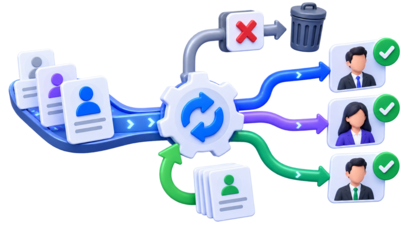
Manual distribution of leads creates delays and risks “cherry-picking” by sales representatives. Automated logic ensures that prospects reach the right account manager based on geography, vertical expertise, or existing account ownership. For high-velocity industries such as iGaming, utilizing a specialized real-time lead distribution engine is essential to validate and route prospects instantly, removing the human bottlenecks that often lead to lost deals.
The following table illustrates the logic required for effective lead assignment:
Once the logic executes, the system pushes the lead directly to the representative’s dashboard, triggering an immediate notification. This eliminates lag time and ensures accountability.
The “Golden Window” SLA: Speed to Lead
The decay of interest in event-sourced leads occurs within hours, not days. Establishing a Service Level Agreement (SLA) requiring contact within 24 hours constitutes a competitive advantage. Prospects often attend multiple booths; the team that provides the most relevant, timely follow-up gains the position of primary vendor.
Implementing an automated sales follow-up process requires integrating triggers that alert sales managers when an SLA breach occurs. If a Tier 1 lead remains uncontacted after 24 hours, the system should automatically escalate the record to a manager. Speed remains the most critical factor in converting event-sourced engagement into verified revenue.
CRM & Tech Stack Integration
B2B event lead management demands a seamless flow of data from the event floor to the CRM (e.g., Salesforce, HubSpot). Siloed systems disrupt the routing logic and prevent real-time analysis. To scale operations effectively, high-growth brands integrate their CRM with a comprehensive partner management platform that serves as a centralized hub for running profitable affiliate campaigns.
Ensure the tech stack validates data integrity during the sync. Duplicate records frequently corrupt the database after large conferences; the system must automatically merge new event interactions with existing profiles. This maintains a single source of truth for every prospect, allowing the sales team to view the complete history of the account before initiating contact.
Analytics & Feedback Loop
Measuring the efficacy of your routing process requires constant monitoring of key performance indicators. Event ROI optimization relies on closing the loop between the leads routed and the deals closed. Management must analyze the conversion rate of distributed leads to identify weaknesses in the funnel.
Conduct post-event reviews to gather feedback from the sales team:
- Did the routing logic assign the right leads to the right representatives?
- Was the scoring criteria accurate in predicting intent?
- Did the enriched data provide sufficient value for successful outreach?
Use these insights to refine the routing logic for the next event. Continuous iteration turns a standard lead process into a highly tuned machine that maximizes the financial return on every conference participation.
Conclusion
Systematic lead routing represents the foundation of a successful event marketing strategy. Organizations that automate the capture, scoring, and distribution of partner leads minimize data loss and capitalize on the high-intent nature of conference networking. By prioritizing speed, accuracy, and data enrichment, companies can convert fleeting event interactions into long-term, revenue-generating partnerships.
FAQ
Become a champion with irev
[Only 10 slots left this month]
Irev puts your partner program on the fast track to real growth


 SIGMA Award Winner
Best marketing solution provider
SIGMA Award Winner
Best marketing solution provider