


Affiliate Partner Types: Media Buyers, Content Sites, Influencers, Communities
Content:
- Main point 1. What are affiliate partner types?
- Main point 2. Media Buyers
- Main point 3. Content Sites
- Main point 4. Influencers
- Main point 5. Communities
- Main point 6. Advantages and disadvantages of each partner type
- Main point 7. How to choose the right affiliate partners
- Conclusion
- FAQ
Introduction
Affiliate marketing is not a single traffic model. It is a partner ecosystem made up of channels with different economics, attribution patterns, audience relationships, and operational requirements. Brands that treat all affiliates as one uniform category usually misjudge performance, overpay for low-incrementality traffic, or fail to scale profitable sources. A more accurate approach starts with partner classification.
The most commercially relevant categories today include affiliate partner types such as media buyers, content publishers, influencers, and communities. Each category sits at a different point in the customer journey. Some partners create demand through exposure and paid reach. Others capture intent during product research, while some drive conversion through trust, reputation, and peer validation. Understanding these mechanics helps advertisers build stronger recruitment, commission, compliance, and optimization strategies.
Main point 1. What are affiliate partner types?
Affiliate partner types are functional groups inside an affiliate program. They are defined not by contract format alone, but by how they generate traffic, what kind of audience relationship they control, which funnel stage they influence, and how they convert demand into measurable actions. In practice, segmentation improves reporting and gives brands clearer visibility into traffic quality, customer intent, and marginal value.
From an operational perspective, types of affiliate partners matter because different categories require different management rules. A coupon site should not be evaluated by the same logic as a paid traffic partner. An influencer cannot be briefed in the same way as a comparison publisher. When brands fail to separate partner classes, they often apply the wrong KPIs, the wrong commission model, and the wrong compliance standards.
The four major groups in this article are the ones most frequently used in modern affiliate marketing partner models:
- Media buyers
- Content sites
- Influencers
- Communities
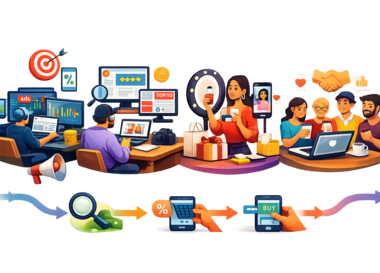
These categories overlap in some cases, but their core operating principles remain distinct. Media buyers purchase traffic and optimize arbitrage. Content sites attract users through discoverable information assets. Influencers monetize personal credibility. Communities convert through repeated interaction and social proof.
Main point 2. Media Buyers
Media buyers are affiliates that acquire traffic through paid channels and route that traffic to advertiser offers under performance terms. Their main advantage is execution speed. They can test creatives, audiences, placements, geographies, and bidding strategies at scale. In many verticals, media buyers are the fastest route to statistically meaningful volume because they work with controlled media inputs rather than waiting for audience growth or organic rankings.
In performance terms, media buyers operate on measurable unit economics. They monitor click-through rate, conversion rate, effective cost per acquisition, average order value, refund rate, and downstream revenue signals. This makes them important partners in campaigns where rapid optimization matters. Brands entering new markets often use media buying affiliates to validate offer-market fit, landing page performance, and funnel economics before larger budget allocation.
Typical traffic sources for media buyers in affiliate marketing include:
- Native advertising
- Paid social
- Push and pop traffic
- Search arbitrage
- Display placements
- In-app inventory
- Programmatic traffic exchanges
Their strengths are structural rather than cosmetic. A skilled media buyer can scale a validated offer faster than most publisher categories because the acquisition engine is built on repeatable testing. This is why media buying affiliate traffic is often associated with high operational intensity and a strong dependence on analytics.
At the same time, this model creates clear risks. Paid traffic can generate compliance issues when affiliates use misleading creatives, trademark bidding, unauthorized pre-landers, or prohibited claims. Traffic quality also varies sharply by source. High click volume does not guarantee commercial value. Some placements produce shallow engagement, low retention, or weak post-conversion quality. Advertisers that work with media buyers need strict approval workflows, source transparency, postback tracking, and fraud controls.
A practical evaluation framework for media buyers usually includes the following checkpoints:
- Source legitimacy and placement transparency
- Creative compliance and brand safety
- Conversion quality beyond the first transaction
- Geographic consistency and device distribution
- Ability to maintain stable performance under scale
When these controls are in place, media buyers can become one of the most productive affiliate traffic sources in a performance program.
Main point 3. Content Sites
Content sites are affiliates that attract users through information assets indexed in search engines, shared in newsletters, or distributed through editorial channels. This group includes blogs, review sites, niche media, educational portals, comparison platforms, and product round-up publishers. Their commercial role is strongest in the evaluation stage, where the user is already problem-aware and is actively comparing options.
The strategic value of content publishers comes from intent alignment. A user reading a review, pricing comparison, tutorial, or “best tools” article is usually closer to a commercial decision than a user who only saw a top-of-funnel ad. For that reason, content sites affiliate marketing remains one of the most durable models for brands that need high-intent visitors and compounding organic visibility.
A strong content affiliate does more than insert links into generic articles. It structures information to reduce purchase uncertainty. That may include:
- Feature breakdowns
- Use-case analysis
- Product comparisons
- Editorial rankings
- Pricing explanations
- Implementation guides
- FAQ content for decision-stage search intent
This format works especially well in complex or research-heavy categories. Software, finance, education, health-adjacent products, B2B services, and consumer electronics all benefit from content-led affiliate distribution because users need context before they convert. In such markets, content affiliates influence not only the final click, but also the framing of product value and category trust.
Another advantage is longevity. Paid campaigns stop when budget stops. A well-ranked content page can keep generating qualified sessions for months or years, provided the publisher updates the material and defends its rankings. That gives content sites a different economic profile from paid traffic partners. The ramp-up is slower, but the traffic asset can become stable and predictable.
However, content sites also have limitations. SEO is competitive, update cycles can be inconsistent, and attribution may undervalue their role when another channel captures the last click. Some publishers also prioritize monetization over editorial rigor, producing thin comparison pages built for commission extraction rather than user utility. Brands should therefore assess content quality, topical relevance, search footprint, update discipline, and the commercial logic of each placement.
Main point 4. Influencers
Influencers promote affiliate offers through personal media channels rather than traditional publisher infrastructure. Their core asset is not inventory but audience trust. They shape demand through narrative, demonstration, recommendation, and repeated exposure. In influencer affiliate marketing, conversion often depends less on technical funnel optimization and more on relevance, credibility, and audience-product fit.
This partner type is especially effective when the product benefits from demonstration or identity alignment. Beauty, fashion, fitness, digital tools, online education, lifestyle products, and creator software all perform well when promoted by creators with established niche authority. Users respond not only to the product itself, but also to the influencer’s interpretation of value, use case, and expected outcome.
The influencer category includes several formats:
| Type | Core strength | Main limitation | Best use case |
| Macro-influencers | Large reach and brand visibility | Lower engagement precision | Awareness and broad launches |
| Micro-influencers | Higher trust and niche alignment | Smaller scale per creator | Efficient performance in focused verticals |
| Subject-matter creators | Strong expertise and authority | Narrow audience scope | Complex or high-consideration products |
| Community-led creators | Deep audience interaction | Slower scaling | Retention, trust, repeat recommendations |
In operational terms, influencer affiliates require a different management model from content publishers or media buyers. Brands need creator screening, messaging guidelines, disclosure controls, promo code logic, and attribution setups that recognize multi-touch behavior. Many conversions happen after delayed decision-making, repeated story views, or channel crossover between video, messaging apps, and search.
Influencer traffic can also be volatile. A creator may deliver strong results for one campaign and weak results for the next because platform algorithms, audience fatigue, and format relevance change quickly. Fraud is another concern. Inflated follower counts, low-quality engagement, and purchased interactions distort apparent reach. For this reason, advertisers should evaluate influencers on conversion quality, not vanity metrics alone.
Strong influencer partnerships usually share three features:
- Audience relevance to the offer
- Authentic product positioning
- Clear tracking and performance attribution
When these elements align, influencer-driven affiliate acquisition can outperform broader paid distribution in both trust and conversion quality.
Main point 5. Communities
Communities are partner environments built around repeated interaction between members rather than one-way publishing. They include forums, private groups, expert circles, Discord servers, Telegram communities, Reddit-style spaces, and membership-based niche platforms. Their commercial power comes from discussion, peer validation, and accumulated reputation. In community-based affiliate marketing, conversion is often the result of social proof, not direct persuasion.
This partner type performs well where buyers seek practical experience before making a decision. In software, gaming, crypto-adjacent tools, productivity, hobbies, finance discussion spaces, and specialist consumer niches, community recommendations often outperform polished ad claims. Users trust usage reports, implementation details, screenshots, case examples, and candid criticism from participants who appear to have no formal sales agenda.
Communities influence purchase behavior through several mechanisms:
- Repeated product mentions in relevant threads
- Informal support and troubleshooting
- Comparative discussion between alternatives
- Exposure to real user outcomes
- Status transfer from respected members to recommended tools
Unlike a landing page, a community environment is dynamic. Recommendation strength depends on moderation quality, cultural norms, topic relevance, and how promotions are introduced. Aggressive sales behavior is usually punished by members or moderators. Effective affiliate activity in communities therefore requires contextual contribution. Partners who only drop links create low trust and short campaign life.
This makes affiliate communities both powerful and difficult to manage. They can produce highly qualified traffic, but the brand cannot control the narrative in the same way it controls ad copy or approved review placements. Measurement is also harder. Some conversions happen after delayed exposure, discussion reading, or link sharing outside the original channel. Brands working with community partners should monitor sentiment, discussion themes, referral quality, and moderation standards.
A mature community strategy treats these spaces as trust networks rather than free traffic reservoirs. The objective is not maximum exposure. The objective is credible visibility inside conversations where the product is genuinely relevant.
Main point 6. Advantages and disadvantages of each partner type
Each affiliate partner type solves a different commercial problem. Media buyers provide immediate scale and controlled experimentation. Content sites capture existing demand and support consideration-stage users. Influencers convert trust and identity into action. Communities drive recommendation-based decision-making where peer input matters. None of these models is universally superior, because their value depends on margin structure, sales cycle length, brand restrictions, and attribution logic.
The right comparison framework is not “which partner type is best,” but “which partner type creates the most incremental value for a given objective.” A launch campaign may benefit from paid reach and creator exposure. A mature software brand may need content-led organic visibility. A specialist product may convert best inside member groups where discussion reduces uncertainty. Strategic affiliate management begins when brands stop comparing all partners through one generic CPA number.
Below is a concise comparison of the major affiliate partner comparison factors:
- Media buyers
- Advantages: fast scale, data-driven testing, flexible targeting
- Disadvantages: compliance risk, volatile costs, uneven traffic quality
- Content sites
- Advantages: high intent, SEO value, long-term discoverability
- Disadvantages: slower ramp-up, ranking dependence, variable editorial quality
- Influencers
- Advantages: trust transfer, strong engagement, persuasive product framing
- Disadvantages: inconsistent repeatability, audience fatigue, tracking complexity
- Communities
- Advantages: strong social proof, qualified discussion-driven traffic, credibility
- Disadvantages: limited control, slower activation, difficult attribution
Another useful lens is how these partner types map to the funnel:
- Media buyers: awareness to conversion, depending on funnel design
- Content sites: evaluation and purchase research
- Influencers: awareness, consideration, and trust-building
- Communities: consideration, validation, and post-interest conversion
For many brands, the highest-performing model is a portfolio, not a single partner category. Diversification reduces dependence on one source, improves attribution insight, and stabilizes acquisition risk across traffic conditions.
Main point 7. How to choose the right affiliate partners
Choosing the right partners starts with commercial constraints, not channel trends. A brand should first define its offer economics, customer acquisition ceiling, regulatory limitations, target geography, funnel maturity, and sales cycle complexity. Without this baseline, recruitment decisions become reactive. The result is usually a partner mix that generates volume without durable profitability.
The second step is matching partner type to buyer intent. If the product is impulse-friendly and margins support aggressive testing, media buyers may be a logical growth lever. If the product requires comparison, technical explanation, or trust-building, content sites and subject-matter creators are often better suited. If social identity, lifestyle fit, or demonstration matters, influencers become strategically relevant. If the category depends on user dialogue and recommendation credibility, communities deserve priority.
A practical partner selection framework can include the following criteria:
- Audience relevance
- Traffic source transparency
- Historical conversion quality
- Compliance discipline
- Geographic fit
- Attribution compatibility
- Content or creative quality
- Ability to scale without performance collapse
Brands should also select commission logic according to partner behavior. Flat CPA, revenue share, hybrid deals, tiered payouts, first-order bonuses, and lifetime value adjustments all serve different purposes. A one-size-fits-all payout model usually distorts incentives. For example, affiliate program partner strategy for content publishers may reward assisted conversions differently from paid traffic campaigns that rely on immediate direct response.
Another best practice is partner mix balancing. A resilient program often combines:
- Media buyers for scalable acquisition tests
- Content sites for persistent intent capture
- Influencers for audience trust and product storytelling
- Communities for validation and recommendation depth
This multi-type model improves both short-term throughput and long-term brand presence. It also makes performance interpretation more accurate because the brand can compare partners against the role they are actually designed to play.
Conclusion
Affiliate growth becomes more predictable when partner categories are understood as distinct commercial mechanisms rather than interchangeable traffic suppliers. Media buyers specialize in scale and speed. Content sites build discoverability and capture research intent. Influencers convert credibility into action. Communities create trust through interaction and peer reinforcement. These differences are operational, economic, and strategic.
Brands that understand best affiliate partner types do not ask which model is universally strongest. They ask which model fits the product, the margin structure, the customer journey, and the measurement system. The most effective programs recruit across multiple categories, assign realistic KPIs to each, and optimize for incremental contribution rather than surface-level volume. That is how affiliate marketing for brands moves from channel experimentation to durable acquisition infrastructure.
FAQ
A common mistake in affiliate management is treating all partner types the same. In reality, they differ in how they generate demand, scale, and appear in attribution. The questions below cover the key issues brands face when building affiliate programs.
The core principle is simple: partner quality depends on fit, control, and measurable business impact, not labels.
- What are the main affiliate partner types?
The main groups are media buyers, content sites, influencers, and communities. Each drives traffic differently and affects buying decisions in its own way. The best partners are not always those with the biggest reach, but those whose traffic, audience intent, and conversion pattern match the advertiser’s offer. - Which affiliate partner type is best for fast scaling?
Media buyers are usually the fastest to scale because they use paid traffic and active testing. Once economics are proven, they can increase spend quickly. But that speed requires control. Brands need clear tracking, compliance rules, and source monitoring to protect traffic quality and brand safety. - Why are content sites important in affiliate marketing?
Content sites reach users during research and comparison, often when purchase intent is high. They also create lasting value. A strong review or comparison page can keep driving qualified traffic over time. - How do influencers work in affiliate programs?
Influencers promote offers through their own channels and earn commissions from tracked actions, usually sales or leads. Results depend on relevance, trust, and authenticity. Practical demonstrations and real experience usually perform better than generic mentions. - Are communities effective for affiliate promotion?
Yes, especially when products benefit from discussion and peer validation.But forced promotion rarely works. Useful participation and contextual relevance are far more effective than aggressive link placement. - Should a brand work with only one affiliate partner type?
Usually no. Relying on one type creates dependency and limits learning.A mixed partner base improves resilience, optimization, and reduces overreliance on one acquisition model. - How can brands evaluate affiliate partners more accurately?
Brands should look beyond CPA and assess conversion quality, retention, refunds, compliance, audience fit, and incremental value.The best approach is to group partners by function and measure them against role-specific KPIs.



Best Affiliate Marketing Software for SaaS in 2026: Top Platforms Compared
Affiliate marketing remains one of the most efficient acquisition channels for subscription businesses because it ties partner compensation to measurable revenue.

Affiliate Program Economics: How to Calculate CAC, LTV and Payback Period
An affiliate channel looks efficient only when its economics remain positive after all acquisition and servicing costs are counted.

Affiliate Marketing Traffic Sources in 2026: SEO, TikTok, Communities & AI Discovery
Affiliate growth now depends on distribution resilience rather than on a single winning tactic. The old model, in which a publisher could build revenue around one source of visits, has become unstable.
