


Lead Distribution vs Classic Tracking: When Your Program Needs Both
Content:
- What Is Classic Tracking?
- What Is Lead Distribution?
- Key Differences Between Lead Distribution and Classic Tracking
- When Lead Distribution Alone Is Not Enough
- When Classic Tracking Falls Short
- Why Your Program Needs Both
- Best Practices for Integrating Tracking and Lead Distribution
- Case Examples: Outcomes When Both Are Used Together
- Conclusion
- Frequently Asked Questions (FAQ)
Efficient lead management depends on two core components: precise measurement of marketing performance and timely processing of every acquired contact. Most organizations invest heavily in analytics platforms but overlook how captured data moves downstream to sales teams. As a result, the customer acquisition pipeline becomes fragmented, and performance indicators lose accuracy. Aligning measurement with operational execution requires integrating classic tracking with a structured lead distribution framework.
Adopting both mechanisms ensures that every interaction is recorded, attributed, and routed to the right destination without delay. This combined approach reduces operational latency, strengthens partner ecosystems, and provides a continuous feedback loop across marketing and sales channels. Companies that unify tracking and routing create a transparent environment where attribution, conversion rates, and partner performance become fully measurable and actionable.
What Is Classic Tracking?
Classic tracking refers to the systematic collection of interaction data across digital touchpoints. A lead tracking system records impressions, clicks, conversion events, referral parameters, and user behavior signals. These data points create the foundation for attribution models, enabling marketers to evaluate which channels, campaigns, and partners contribute to measurable outcomes. Tracking mechanisms may rely on cookies, server-to-server endpoints, postbacks, and tag management systems, ensuring comprehensive data continuity.
Beyond measurement, classic tracking establishes a unified data layer for optimization and compliance. Accurate telemetry allows organizations to detect anomalies, validate partner traffic quality, and assess ROI across acquisition sources. This methodology strengthens reporting precision and supports predictive analytics, particularly in environments with high-volume lead flows and multi-channel marketing architectures.
What Is Lead Distribution?
Lead distribution is the automated assignment of incoming leads to internal teams, external partners, or specific sales representatives. It ensures that every lead is delivered to the proper entity based on predefined routing rules, such as geography, budget, product line, qualification score, or partner agreements. Efficient lead routing accelerates response time, increases conversion probability, and eliminates data bottlenecks between marketing and sales operations.
A robust distribution mechanism incorporates routing logic, API connectors, validation layers, and activity tracking. It enforces operational transparency by ensuring leads never remain unassigned or lost due to manual processing errors. Whether used in reseller networks or partner programs, the distribution model provides uniform control over how leads flow downstream and how each partner engages with them.
Key Differences Between Lead Distribution and Classic Tracking
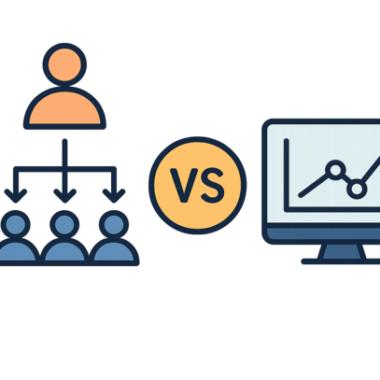
Although both systems operate within the lead lifecycle, they serve fundamentally different purposes. Classic tracking measures interactions and attributes them to specific sources. Lead distribution, in contrast, focuses on actionability and operational delivery.
Comparison Table
| Function | Classic Tracking | Lead Distribution |
| Primary Purpose | Measurement & attribution | Lead assignment & routing |
| Data Type | Traffic and conversion data | Lead records and metadata |
| Key Output | Analytics dashboards, attribution models | Distributed leads, routing logs |
| Beneficiaries | Marketing, BI teams | Sales teams, partners |
| Timing | Pre-conversion | Post-conversion |
| Risks if Missing | Lack of visibility into performance | Leads remain unprocessed |
Classic tracking provides analytical oversight, helping organizations understand what drives conversions. Lead distribution ensures the leads generated through these conversions move efficiently through operational channels. Without clear tracking data, companies cannot correlate partner performance with business outcomes. Without distribution, they fail to execute on the opportunities the data reveals.
When Lead Distribution Alone Is Not Enough
Lead distribution cannot independently support strategic decision-making. Without a reliable analytical foundation, organizations lack insight into the sources producing qualified leads or identifying high-value partners. This results in inefficient budget allocation and inconsistent performance measurement.
Key limitations of using distribution alone include:
- No attribution model — Sales teams receive leads but cannot determine which channels influenced user behavior.
- Insufficient traffic verification — Without tracking data, detecting fraudulent patterns or invalid traffic becomes difficult.
- Lack of optimization inputs — Marketing teams cannot adjust campaigns or enforce performance standards without measurable indicators.
Even in advanced partner programs, distribution without tracking leads to a one-directional operational flow, leaving strategic initiatives unsupported by empirical evidence.
When Classic Tracking Falls Short
Classic tracking provides strong diagnostic capability but cannot support execution without operational routing. Measurement alone does not deliver leads to the right destinations, nor does it prioritize or validate them. If tracking operates without distribution, lead management becomes fragmented and inefficient.
Common issues that arise when organizations rely solely on tracking include:
- Delayed response time, as leads are not systematically routed to available teams.
- Partner dissatisfaction, due to inconsistent delivery of leads or unclear handling processes.
- Operational losses, including unassigned, duplicated, or improperly matched leads.
Tracking identifies opportunities; distribution activates them. Without automated routing, even well-optimized campaigns produce limited business value.
Why Your Program Needs Both
Integrating classic tracking with lead distribution creates a unified pipeline that connects analytical measurement with operational execution. This enhances the accuracy of attribution models while ensuring every captured lead is delivered and acted upon.
Key advantages include:
- Holistic visibility — Organizations gain a complete perspective of both traffic inputs and operational outcomes.
- Improved ROI accuracy — With both systems active, marketing investments can be evaluated based on actual conversion performance and partner contribution.
- Optimized lead lifecycle — Tracking enriches lead data, while distribution ensures timely engagement.
- Stronger partner programs — Transparent measurement and consistent routing build trust and accountability.
The combined system establishes a controlled ecosystem where insights feed operational strategy, and operational outcomes reinforce analytical precision.
Best Practices for Integrating Tracking and Lead Distribution
A unified system requires consistent data architecture and synchronized workflows. To achieve this, organizations should implement the following practices:
Technical Recommendations
- Use a standardized data schema across tracking and routing platforms.
- Implement API-based connectors to ensure real-time lead delivery.
- Maintain unique identifiers for cross-system data consistency.
Operational Recommendations
- Configure lead scoring models to prioritize delivery and response efficiency.
- Establish validation rules to detect incomplete or duplicate leads before distribution.
- Provide partners with dashboards showing both attribution metrics and assigned leads.
A well-designed integration reduces delays, preserves data integrity, and ensures both analytics and sales teams rely on the same information framework.
Case Examples: Outcomes When Both Are Used Together
Organizations that combine classic tracking and lead distribution typically see measurable performance improvements. These outcomes often include higher conversion rates, stronger partner compliance, and improved budget planning accuracy.
Example Improvements
- Enhanced Attribution Accuracy: A telecom provider gained a 40% increase in attribution precision after linking routing data with channel tracking, allowing clearer budget allocation.
- Faster Lead Engagement: A B2B reseller network reduced lead response time from 12 hours to under 30 minutes by implementing automated routing combined with real-time tracking signals.
- Quality Control Enforcement: A partner program introduced fraud detection rules based on tracking analytics, reducing invalid leads by 22% and improving downstream conversion rates.
These examples illustrate how integrating measurement and execution produces reliable, quantifiable gains.
Conclusion
Successful customer acquisition requires aligning data measurement with operational routing. Classic tracking provides visibility into traffic sources and conversion behavior, forming the analytical backbone for decision-making. Lead distribution ensures every lead reaches its intended recipient quickly and accurately, minimizing operational losses and maximizing sales efficiency.
When deployed together, both systems create a continuous, data-driven loop. Tracking validates marketing performance, while distribution activates opportunities and delivers measurable results. Organizations seeking accuracy, scalability, and transparency across marketing and sales pipelines benefit most from this unified approach.
FAQ
- What is the main difference between classic tracking and lead distribution?
Classic tracking measures interactions and attributes conversions, while lead distribution assigns leads to sales teams or partners based on predefined rules. - Can lead distribution work without tracking?
It can operate functionally but will lack attribution, data validation, and optimization inputs, limiting strategic decision-making. - Do partner programs benefit from using both systems?
Yes. Combining analytics with routing enhances transparency, validates partner performance, and ensures timely engagement. - How do companies integrate tracking with lead routing systems?
Integration typically involves standardized data models, shared identifiers, and API-based communication between analytics and routing platforms. - What mistakes should organizations avoid?
Avoid manual routing, inconsistent data structures, lack of validation rules, and misalignment between attribution logic and operational workflows.



Best Affiliate Marketing Software for SaaS in 2026: Top Platforms Compared
Affiliate marketing remains one of the most efficient acquisition channels for subscription businesses because it ties partner compensation to measurable revenue.

Affiliate Program Economics: How to Calculate CAC, LTV and Payback Period
An affiliate channel looks efficient only when its economics remain positive after all acquisition and servicing costs are counted.

Affiliate Partner Types: Media Buyers, Content Sites, Influencers, Communities
Affiliate marketing is not a single traffic model. It is a partner ecosystem made up of channels with different economics, attribution patterns, audience relationships, and operational requirements.
