
Best Lead Distribution Software 2026

Introduction
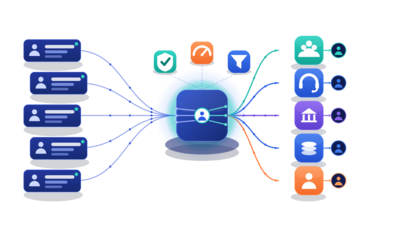
Lead distribution software controls how inbound leads move from capture points to sales representatives, partner buyers, call centers, branches, or account owners. For revenue teams, the assignment process affects contact speed, conversion rate, pipeline quality, and paid acquisition ROI.
In 2026, manual routing through spreadsheets, shared inboxes, and CRM queues creates operational risk. High-intent prospects require immediate follow-up, accurate ownership, and clear accountability. The best lead distribution software combines routing rules, scoring, enrichment, CRM sync, SLA tracking, and reporting in one controlled workflow. Companies that manage high-volume inbound demand can use automated lead distribution software to route, validate, and monitor leads in real time, helping sales and partner teams reduce delays while keeping every assignment decision traceable.
What Is Lead Distribution Software?
Lead distribution software is a system that automatically assigns incoming leads to the correct recipient based on predefined business rules. The recipient can be a sales rep, territory team, account owner, agency partner, lead buyer, franchise location, or call center queue.
Lead distribution is broader than basic lead assignment. Assignment decides who owns the lead. Routing applies logic that determines the destination. Lead management covers the full lifecycle after that point, including nurturing, opportunity creation, pipeline tracking, and revenue reporting.
Core functions include:
- lead capture from forms, ads, APIs, calls, and imports;
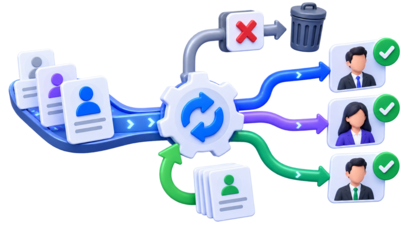
- validation, deduplication, and enrichment;
- lead scoring and qualification;
- round-robin, territory, account, and skill-based routing;
- CRM synchronization and owner updates;
- SLA tracking and performance reporting.
A strong lead routing system creates one source of truth for marketing, sales, RevOps, and leadership. It reduces rep conflicts, prevents lost leads, and gives managers evidence for every assignment decision.
Key Features to Look for in 2026
The best platform is not the tool with the longest feature list. The right platform matches the company’s sales model, CRM architecture, lead volume, data quality, routing complexity, partner structure, and compliance requirements.
In 2026, buyers should prioritize real-time routing, no-code rule management, data enrichment, AI-assisted qualification, duplicate detection, and transparent reporting. These capabilities reduce administrative work and increase speed-to-lead.
Core evaluation criteria:
- real-time lead routing and owner assignment;
- round-robin, weighted, territory, account, and capacity-based routing;
- lead scoring, validation, deduplication, and enrichment;
- Salesforce, HubSpot, calendar, dialer, and marketing automation integrations;
- SLA monitoring and response-time alerts;
- routing history and audit logs;
- reporting by source, rep, team, campaign, and revenue outcome.
A scalable lead assignment software product should also support permission control. Sales reps, managers, partners, and operations teams need different access levels. Without role control, sensitive lead data spreads across tools without governance.
Best Lead Distribution Software Providers in 2026
The 2026 shortlist for lead routing software often includes LeanData, Chili Piper, LeadAngel, Traction Complete, Default, RevenueHero, Calendly, HubSpot, Salesforce, LeadByte, boberdoo, Phonexa, LeadSquared, Zoho CRM, and Pipedrive. These tools serve different use cases, so direct ranking without context is inaccurate.
A B2B SaaS company needs account-based routing and meeting handoff. A lead generation agency needs buyer caps, validation, ping-post delivery, and billing workflows. An insurance marketplace needs compliance filters and partner distribution. A franchise network needs location-based routing. When lead flow depends on agencies, buyers, resellers, or other external partners, a partner management platform for lead-based programs can help organize partner access, performance visibility, commission logic, and reporting across the full distribution workflow.
The best lead routing software depends on the operating model. Salesforce-heavy teams should examine native CRM routing depth. Lead sellers should prioritize buyer rules and delivery logic. High-growth inbound teams should test routing speed, scheduling, capacity rules, and SLA visibility.
Lead Routing Rules and Assignment Logic
Routing logic is the operating core of any lead distribution system. Poor rules send valuable prospects to the wrong owner, overload strong reps, create regional gaps, and delay follow-up. A routing engine should reflect the company’s sales motion, not force the team into a rigid queue.
Modern systems combine several assignment methods in one workflow. A lead can pass through validation, deduplication, account matching, territory checks, score thresholds, rep availability, and meeting-booking rules before final assignment.
Common routing models include:
- round-robin routing for balanced rep distribution;
- weighted round-robin for different capacity levels;
- territory-based routing by country, state, city, or ZIP code;
- account ownership routing for B2B sales motions;
- industry or segment routing for specialized teams;
- product-based routing for multi-line businesses;
- availability routing based on calendar or working hours;
- score-based routing for high-value prospects;
- buyer or partner routing for lead marketplaces.
Routing rules should be easy to adjust without developer support. Revenue teams change territories, hiring plans, segments, and qualification thresholds regularly. No-code routing control helps RevOps respond quickly without creating fragile CRM logic.
Lead Scoring, Qualification, and Data Enrichment
Distribution quality depends on data quality. A routing engine cannot make accurate decisions if lead source, company size, location, industry, product interest, account ownership, or intent data is missing. Bad data creates misrouting even when the logic is technically correct.
Lead scoring ranks prospects before assignment. Qualification checks whether the lead meets minimum sales criteria. Enrichment adds missing company and contact details. Together, these functions help teams prioritize valuable prospects and filter low-quality submissions.
Important scoring and enrichment inputs include:
- firmographic data: company size, industry, revenue, location;
- demographic data: role, seniority, department, contact details;
- behavioral data: page visits, form fills, webinar activity;
- intent data: buying signals, keyword interest, content engagement;
- CRM data: existing account, open opportunity, customer status;
- source data: campaign, channel, partner, UTM, landing page.
A mature lead management software workflow should qualify leads before routing when volume is high. This prevents sales teams from spending time on duplicates, invalid contacts, students, vendors, competitors, and unqualified inquiries.
CRM Integrations, Automation, and Workflow Control
CRM integration is essential because the CRM usually stores ownership, pipeline stage, activity history, account data, and opportunity records. Salesforce, HubSpot, Zoho, Pipedrive, Microsoft Dynamics, and custom CRMs often act as the system of record for revenue operations.
A strong CRM lead routing software product should sync lead fields, update owners, create tasks, trigger notifications, schedule meetings, push records to dialers, and preserve attribution from source to closed revenue. Integration gaps create duplicate records and reporting errors.
Useful integrations include:
- Salesforce and HubSpot CRM;
- calendar and scheduling tools;
- marketing automation platforms;
- dialers and call center systems;
- webforms and landing page builders;
- enrichment providers;
- Slack, Teams, and email alerts;
- APIs and webhooks.
Workflow control should include fallback rules. If the assigned rep is unavailable, out of office, over capacity, or outside working hours, the lead should move to another qualified owner. This protects response time and prevents leads from sitting idle.
Reporting, Compliance, Scalability, and ROI
Reporting turns automated lead distribution into a measurable revenue process. Managers need visibility into assignment speed, SLA compliance, rep performance, lead source quality, rejection rates, conversion rates, and revenue contribution.
Basic dashboards show volume. Advanced dashboards show where profit is created or lost. A team should be able to compare paid search leads with partner leads, inbound demo requests, referral leads, event leads, and marketplace submissions by conversion and revenue.
Key reports include:
- speed-to-lead by source and team;
- routing outcomes and assignment history;
- rep-level contact and conversion rates;
- SLA breaches and response delays;
- duplicate, invalid, and rejected leads;
- lead source ROI and cost per qualified lead;
- partner or buyer acceptance rates;
- revenue by campaign, territory, and segment.
Compliance and scalability become more important as lead volume grows. Regulated industries need consent records, audit logs, opt-in status, suppression rules, partner caps, data retention controls, and permission management. Large teams also need routing history and change logs to explain assignment decisions.
Conclusion
Choosing the best lead distribution software 2026 requires operational analysis, not a surface-level vendor list. The right platform depends on sales structure, CRM stack, lead sources, qualification process, routing complexity, compliance duties, and reporting needs.
Companies should build a requirements matrix before vendor selection. The matrix should score routing logic, CRM sync, enrichment, duplicate detection, SLA tracking, reporting, integrations, usability, support, implementation effort, and total cost.
A strong system improves speed-to-lead, protects sales capacity, reduces manual work, and increases accountability across the funnel. The strongest results come from testing real workflows before purchase: form submission, enrichment, duplicate check, scoring, routing, scheduling, CRM update, SLA alert, and revenue report.
FAQ
The following questions summarize the main selection points for lead distribution software providers. The answers focus on operational value, routing accuracy, and sales performance.
Before choosing a platform, companies should define lead sources, owner rules, qualification criteria, CRM fields, partner logic, SLA targets, reporting needs, and compliance constraints.
1. What is the best lead distribution software in 2026?
There is no single best platform for every company. LeanData, Chili Piper, LeadAngel, Traction Complete, Default, RevenueHero, LeadByte, and boberdoo serve different use cases.
The best choice depends on CRM architecture, sales model, lead volume, routing complexity, partner structure, compliance requirements, and reporting depth.
2. What does lead distribution software do?
It captures, validates, scores, and assigns leads to the right rep, team, partner, branch, buyer, or call center. Assignment rules can use territory, availability, account ownership, source, score, product interest, or capacity.
It also records routing history, updates CRM ownership, triggers notifications, tracks SLA performance, and supports reporting on conversion and ROI.
3. What is the difference between lead routing and lead distribution?
Lead routing is the logic that decides where a lead should go. Lead distribution is the broader process that sends the lead to the selected destination and records the handoff.
In internal sales teams, the terms overlap. In lead generation businesses, distribution often includes external buyers, partner caps, ping-post delivery, call routing, and billing.
4. Which routing model is best for sales teams?
Round-robin works for balanced teams with similar territories and skill levels. Territory routing works for regional sales. Account-based routing works for B2B teams with named accounts.
Score-based routing fits companies that prioritize high-value prospects. Capacity-based routing protects overloaded reps and keeps response times stable.
5. Why is speed-to-lead important?
Fast follow-up reaches prospects while intent is active. Delays reduce contact rates, increase competitor exposure, and waste paid media spend.
Speed-to-lead also improves accountability. Managers can identify whether losses come from source quality, routing delays, rep behavior, or qualification rules.
Become a champion with irev
[Only 9 slots left this month]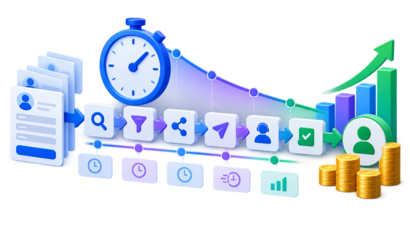
Irev puts your partner program on the fast track to real growth


 SIGMA Award Winner
Best marketing solution provider
SIGMA Award Winner
Best marketing solution provider