
Ping-Post vs Direct Post Lead Distribution

Introduction
Lead distribution determines how a captured inquiry moves from a form, call, affiliate source, publisher, or marketplace to the buyer for follow-up. In insurance, mortgage, solar, home services, and education, the delivery model affects revenue per lead, response speed, buyer satisfaction, and compliance control.
This article compares ping-post lead distribution and direct post lead distribution as two models for routing and selling leads. It explains how each model works, where it performs best, and how companies should evaluate ROI. For teams that manage both internal sales delivery and external buyer networks, lead routing and delivery software can help control validation, routing rules, real-time distribution, and reporting across ping-post, direct post, or hybrid lead workflows.
What Is Ping-Post Lead Distribution?
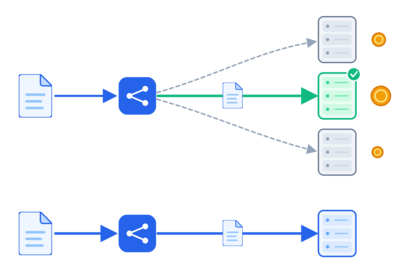
Ping-post is a two-step lead distribution model. First, the seller sends a limited data package, called the ping, to one or more buyers. The ping usually contains non-contact fields: ZIP code, product interest, age range, loan amount, coverage type, property type, or other criteria needed for evaluation.
Second, buyers return an acceptance, rejection, or bid. The system then posts the full lead record to the winning buyer. That record can include name, phone, email, address, consent data, and other contact fields. This creates a controlled decision process before personal information is delivered.
Typical ping-post workflow:
- A lead enters the platform.
- The system validates fields and checks duplicates.
- A ping with partial data is sent to eligible buyers.
- Buyers respond with bids, acceptances, or rejections.
- The platform selects the winner.
- The full lead is posted to the winner.
- Delivery and compliance logs are stored.
Ping-post is common where several buyers compete for the same lead type. It helps sellers improve yield, gives buyers more control over what they purchase, and limits unnecessary PII exposure before confirmation.
What Is Direct Post Lead Distribution?
Direct post is a single-step lead delivery software model. The full lead record is sent directly to a predefined buyer, CRM, call center, partner, or internal sales team. There is no separate ping stage and no real-time bidding process before delivery.
This model is useful when the destination is already known. Examples include an exclusive buyer contract, a regional office, an internal sales queue, a franchise location, or a CRM endpoint assigned by static routing rules.
A direct post workflow usually includes:
- lead capture from a form, call source, ad campaign, or API;
- validation and required field checks;
- duplicate detection or suppression review;
- routing by buyer, territory, product, or source;
- full lead delivery by API, webhook, email, or CRM integration.
Direct post is simpler to implement than ping-post because it avoids buyer auctions, response parsing, timeout rules, and bid ranking. Its main advantage is operational speed and predictability when stable relationships matter more than dynamic pricing.
Key Differences Between Ping-Post and Direct Post
The main difference is the order of data exposure. Ping-post shares partial data first and sends the complete record only after buyer acceptance. Direct post sends the full record immediately to the selected destination. This affects compliance, pricing, technical design, and buyer control.
Neither method is universally superior. Ping-post is stronger when multiple buyers compete for leads with variable value. Direct post is stronger when routing is predictable, relationships are fixed, and implementation simplicity matters.
A company should compare both methods against its operating model. A simple internal sales team rarely needs a full ping tree. A competitive lead marketplace usually loses margin if it relies only on fixed direct posting.
Pricing, Bidding, and Revenue Optimization
Ping-post supports dynamic price discovery. Buyers can value each lead by geography, intent, category, availability, budget, conversion probability, and current capacity. This is why ping post lead selling is common where demand changes by state, risk profile, property type, or customer intent.
For sellers, the main advantage is yield optimization. If several qualified buyers want the same lead, the platform can award it to the highest eligible buyer or to the buyer with the best balance of price, acceptance rate, and compliance score. When lead sellers work with multiple buyers, affiliates, publishers, or agencies, a partner platform for buyer network management can help structure partner access, commercial rules, performance visibility, and payout logic around the full lead distribution process.
Direct post usually relies on fixed pricing or predefined commercial terms. This makes reconciliation easier because the sale price, destination, and buyer relationship are known in advance. It also reduces dispute risk when the buyer and seller have a long-term contract.
The limitation is that direct post can underprice leads when demand is high. If a lead in a high-converting ZIP code has several interested buyers, a fixed arrangement can leave revenue uncollected. The tradeoff is lower operational friction.
Compliance, Consent, and Data Protection
Compliance is central to lead distribution software because lead records often contain personal data and regulated consent signals. Companies must track opt-in language, consent timestamp, source URL, IP address, buyer disclosure, suppression checks, and delivery history.
Ping-post supports data minimization because the initial ping can exclude direct contact fields. Buyers receive enough information to evaluate fit, but not enough to contact the consumer. This reduces unnecessary exposure of PII before the seller confirms a legitimate buyer.
Direct post can also be compliant, but it requires stronger endpoint governance. Since the full lead is sent at once, the seller must verify buyer authorization, field security, consent transfer, accepted use, and delivery logging before transmission.
Key controls for both models include:
- consent capture and storage;
- TCPA, GDPR, CCPA, or local compliance logic;
- suppression list checks;
- buyer verification and contract controls;
- audit logs for every delivery attempt;
- duplicate and invalid lead filtering;
- secure API transmission and access control.
Compliance should produce evidence that explains who received the lead, what data was shared, when it was shared, and which consent record supported delivery.
Technology, Integrations, and Routing Logic
Ping-post requires more advanced infrastructure than direct post. A ping post platform must support ping trees, buyer filters, bid responses, timeout rules, caps, duplicate checks, fallback buyers, response parsing, and final post delivery.
The system also needs reporting by buyer, source, campaign, bid, acceptance rate, sell rate, return reason, and revenue per lead. Without this visibility, sellers cannot optimize routing trees or detect low-performing buyers.
Direct post requires fewer moving parts, but reliable engineering still matters. The system must validate data, map fields, push records to the correct endpoint, retry failed deliveries, log errors, and update the CRM or buyer platform.
Important technical capabilities include:
- API and webhook support;
- CRM and call center integrations;
- field mapping by buyer or campaign;
- duplicate detection and validation;
- routing by source, product, state, score, or capacity;
- timeout and retry handling;
- real-time dashboards and delivery logs.
The best lead routing software should allow business users to change rules without rewriting code. Buyer budgets, territories, filters, and schedules change often, so no-code rule management helps teams avoid delays.
When to Use Ping-Post vs Direct Post
Use ping-post when the business sells leads to multiple buyers and lead value varies by attributes. It works best when buyers have different filters, budgets, conversion models, and bid strategies. It is also useful when the seller wants to limit data exposure before sale.
Ping-post fits competitive lead marketplaces, insurance lead exchanges, mortgage lead sellers, home services platforms, solar lead networks, and financial services campaigns. It helps maximize revenue per lead when there is enough buyer demand to justify bidding infrastructure.
Use direct post when the buyer destination is already known and the company values simplicity. It works well for exclusive buyer agreements, internal sales teams, franchise routing, call center delivery, fixed-price partnerships, and CRM-first workflows.
A hybrid model is often the most practical option. A company can use ping-post for competitive buyer pools and direct post for exclusive clients, internal teams, or strategic partners. This approach protects revenue while keeping simple workflows simple.
Conclusion
Ping-post and direct post are both valid lead distribution system models, but they solve different problems. Ping-post is built for competition, dynamic pricing, buyer choice, and controlled data exposure. Direct post is built for speed, fixed relationships, predictable routing, and easier implementation.
The right choice depends on buyer count, lead volume, pricing strategy, compliance requirements, technical resources, and reporting needs. Companies should evaluate both models through real workflows, not abstract feature lists.
Before implementation, test validation, routing rules, buyer responses, API delivery, consent logs, duplicate checks, fallback paths, and revenue reporting. A strong model improves conversion economics and protects both the buyer relationship and the consumer data trail.
FAQ
The following answers summarize practical differences between ping post vs direct post and explain how companies should choose a lead delivery model. The best decision depends on market structure, technical capacity, and revenue goals.
Before selecting a model, define buyer count, pricing rules, lead sources, compliance requirements, data fields, endpoint requirements, reporting needs, and operational ownership.
1. What is the difference between ping-post and direct post?
Ping-post sends partial lead data first and delivers the full record only after buyer acceptance or bidding. Direct post sends the full lead immediately to a predefined buyer, CRM, or sales endpoint.
2. Which model is better for lead sellers?
Ping-post is stronger when multiple buyers compete for the same lead type. Direct post is stronger when the seller has fixed buyer relationships, exclusive contracts, or internal routing needs.
3. Which model is better for lead buyers?
Ping-post gives buyers more control because they can evaluate a lead before purchase. Direct post is better when the buyer trusts the source and wants predictable delivery without bidding overhead.
4. Is ping-post more compliant than direct post?
Ping-post can reduce unnecessary PII exposure before sale, but compliance depends on consent records, buyer validation, audit logs, and secure delivery. Direct post can also be compliant with strong controls.
5. Can companies use both models?
Yes. Many lead businesses use ping-post for open buyer pools and direct post for exclusive buyers, internal teams, CRM workflows, or fixed-price campaigns.
Become a champion with irev
[Only 9 slots left this month]
Irev puts your partner program on the fast track to real growth


 SIGMA Award Winner
Best marketing solution provider
SIGMA Award Winner
Best marketing solution provider