
Lead Rejection Management: How to Re-Route Rejected Leads Without Losing Revenue

Introduction
A rejected lead does not automatically represent a failed acquisition. In lead generation businesses, buyers reject submissions for reasons that extend far beyond poor lead quality. A buyer can reach a daily cap, exclude a specific geographic area, reject a duplicate already stored in its CRM, suspend an endpoint, change bid requirements, or decline a lead because it falls outside a campaign-specific filter. When a distribution system treats every rejection as final, valid demand remains unused and potential revenue disappears from the routing workflow.
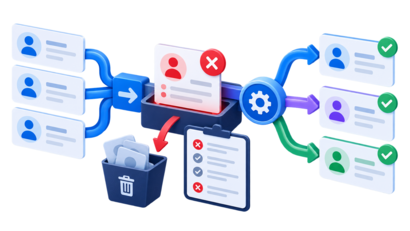
Effective lead rejection management addresses this problem by deciding what should happen immediately after a buyer declines a submission. Instead of terminating delivery, the system records the rejection reason, evaluates the lead against remaining buyer requirements, excludes unsuitable destinations, and starts lead re-routing when another valid monetization path exists. This approach improves sell-through without requiring additional traffic acquisition and gives lead sellers tighter control over buyer acceptance, routing latency, and revenue per lead.
What Is Lead Rejection Management?
Lead rejection management is the operational process used to classify buyer rejections and determine the next action for each declined lead. It sits between initial lead distribution and final lead disposition. A complete workflow therefore does not end when Buyer A returns a rejection. The response becomes an input for another routing decision: accept the loss, correct the data, retry delivery, send the lead to another buyer, move it into a secondary campaign, or suppress it from further distribution.
This distinction matters because several lead statuses are frequently grouped together even though they require different treatment. A rejected lead has reached a buyer and failed a buyer-side condition. An invalid lead fails validation because required data is inaccurate, incomplete, fraudulent, or unusable. An unsold lead has not produced a successful transaction, while a returned lead was initially accepted and later disputed or returned under contractual rules. A duplicate can be unacceptable to one buyer while remaining eligible for another buyer operating with a different deduplication window.
A structured lead routing process should therefore distinguish at least the following outcomes:
- accepted and sold;
- soft rejection eligible for another route;
- hard rejection that blocks further delivery;
- technical delivery failure;
- buyer-specific duplicate;
- globally invalid or fraudulent submission;
- unsold lead eligible for recycling;
- expired lead that has exceeded the permitted delivery window.
The objective is not to force every lead through as many buyers as possible. Effective lead routing rules protect buyer relationships, consent requirements, data quality, and response speed while recovering revenue from leads that remain commercially valid. A lead should continue through the distribution system only when the rejection reason and contractual conditions permit another delivery attempt.
Why Buyers Reject Leads
Buyer rejection rates depend on campaign configuration, vertical, traffic source, buyer capacity, validation requirements, and commercial agreements. Two buyers purchasing the same lead type can apply completely different eligibility rules. One buyer can accept nationwide traffic while another works with five states. One can purchase shared leads, while another requires exclusivity. A lead rejected by the second buyer can therefore remain commercially viable elsewhere.
Understanding lead rejection reasons is the foundation of effective re-routing. A distribution platform should capture structured rejection codes instead of storing a generic failed status. Structured responses make it possible to separate recoverable declines from terminal failures and to identify systematic problems across sources, campaigns, buyers, and routing rules.
Geographic Mismatch
Geographic filtering is one of the clearest examples of a buyer-specific rejection. A home services buyer can accept leads only within selected ZIP codes, while an insurance buyer can operate only in licensed states. The lead itself can be complete and valid but still fail the destination’s geographic criteria.
A geographic rejection should normally remove the current buyer from consideration rather than invalidate the submission globally. The routing engine can compare the same ZIP code, region, state, or country against other active campaigns and continue distribution to a buyer whose service area includes the lead.
Buyer Caps and Capacity Limits
Buyers frequently define hourly, daily, weekly, campaign-level, or source-level caps. These limits protect call-center capacity, sales-team workloads, budgets, and contractual purchasing volumes. When the relevant cap has already been consumed, an otherwise qualified lead can receive a rejection.
A cap-related decline is a strong candidate for automatic lead routing to another destination. The platform should check remaining capacity before every delivery whenever real-time cap information is available. If a buyer still rejects after submission because its external capacity has changed, the response should trigger an immediate fallback instead of placing the lead in an unsold queue.
Duplicate Leads
Duplicate rules can operate across different time windows and identifiers. A buyer can check phone number, email address, customer ID, address, or combinations of fields. It can reject a lead seen during the previous 30 days even when another buyer uses a seven-day deduplication period.
For this reason, a buyer-level duplicate is not necessarily a global duplicate. The lead distribution system should record which destination rejected the submission and continue evaluating other eligible buyers. Sending the same record repeatedly to the same endpoint only increases delivery load and damages buyer trust.
Lead Validation and Data Quality Issues
Validation failures include malformed phone numbers, invalid postal codes, missing mandatory fields, unsupported product values, inconsistent locations, and other data issues. These failures require more caution because some errors affect every buyer rather than one campaign.
The correct action depends on the validation layer. A formatting issue that can be normalized safely can be corrected before another attempt. A fabricated identity, invalid consent record, fraudulent submission, or unusable contact value should normally produce a hard stop. Rejected lead management must therefore distinguish correctable technical data issues from fundamental quality failures.
Buyer-Specific Filters
Buyers often define detailed acceptance criteria covering age, income bands, product type, property characteristics, loan amount, vehicle attributes, business size, service category, operating hours, or internal risk thresholds. A lead can satisfy the general campaign definition while failing one buyer’s narrower rules.
A rules-based routing engine should incorporate these constraints before posting whenever possible. Pre-routing qualification reduces unnecessary API requests and shortens delivery time. When the buyer applies proprietary filters that are unavailable to the seller, its rejection response should feed directly into the fallback workflow.
Pricing and Bid Rejections
Price-based rejection occurs when the seller’s floor price exceeds a buyer’s bid, the buyer changes its real-time valuation, or the lead fails to generate an acceptable offer in an auction. The submission still has potential value, but not at the original commercial terms.
In this situation, a secondary buyer with a lower bid can be preferable to a complete loss, provided the transaction still meets the seller’s margin requirements. Lead redistribution should therefore consider both probability of acceptance and expected revenue rather than simply moving from the highest-priced buyer to the next name in a static list.
Technical Delivery Failures
Endpoint timeouts, HTTP errors, unavailable APIs, malformed responses, authentication problems, and network failures differ from commercial rejection. The buyer might never have evaluated the lead at all. Treating such failures as buyer declines can distort the buyer rejection rate and eliminate valid opportunities.
Technical errors need dedicated retry and fallback logic. A temporary timeout can justify one controlled retry, while persistent endpoint failure should remove the buyer from the active pool and trigger another route. Systems should also distinguish a confirmed buyer rejection from an unknown delivery status to prevent accidental duplicate sales.
Which Rejected Leads Can Be Re-Routed?
The central decision in lead re-routing is whether the original rejection applies only to one buyer or invalidates the lead across the entire marketplace. Buyer-specific restrictions generally leave room for another transaction. Fraud, missing consent, prohibited data, or globally invalid contact information normally require suppression rather than continued distribution.
A useful classification model separates soft rejection, hard rejection, and technical failure. Soft rejections permit another commercial attempt. Hard rejections terminate distribution because the record violates quality, compliance, or fundamental eligibility requirements. Technical failures require confirmation of delivery state before another post is made.
Rejection reasons and re-routing decisions
Re-routing should also respect lead age. A record that was attractive at the moment of capture can lose value rapidly if several routing attempts introduce significant delay. The platform should therefore combine rejection eligibility with maximum lead age, current buyer availability, consent scope, and campaign-specific delivery rules.
The system also needs a maximum-attempt policy. Unlimited retries create duplicate risk, increase latency, and can cause a poor buyer experience. A controlled lead routing strategy defines how many destinations can receive the lead, which rejection types consume an attempt, and when the record should move into a different monetization workflow.
How Automatic Lead Re-Routing Works
Automated lead routing replaces manual redistribution with event-driven logic. When Buyer A rejects a post, the routing platform receives the response, maps it to a standardized rejection category, updates buyer eligibility, and recalculates the remaining routes. If Buyer B meets the campaign rules and has capacity, the lead can be transmitted without waiting for an operator to review the transaction.
A typical sequence consists of eight steps:
- The platform captures and validates the lead.
- Routing rules build a pool of eligible buyers.
- Buyer A receives the first delivery attempt.
- Buyer A returns an acceptance, rejection, or technical response.
- The platform classifies the response and records the rejection reason.
- Buyer A is excluded from inappropriate repeat attempts.
- The routing engine selects the next eligible destination.
- Delivery continues until acceptance or until the permitted routes are exhausted.
This process needs deterministic logging. Every attempt should record buyer, campaign, timestamp, response code, price, rejection category, routing rule, and final outcome. Without this history, operations teams cannot determine whether lost revenue comes from traffic quality, buyer configuration, technical delivery, pricing, or inefficient routing.
Waterfall Re-Routing
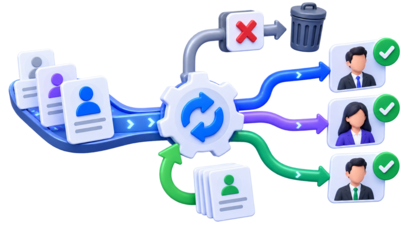
In waterfall lead distribution, buyers are arranged in a sequence according to priority, price, contractual value, or another predefined rule. If the first buyer rejects the lead, the system sends it to the next eligible buyer. The process continues until a sale occurs or the waterfall is exhausted.
Waterfalls are straightforward to manage, but static ordering can become inefficient when acceptance rates or buyer capacity change during the day. A buyer positioned high in the waterfall can repeatedly reject a certain traffic segment, adding latency before the lead reaches the buyer most likely to accept it.
Priority-Based Routing
Priority routing adds decision criteria beyond a fixed sequence. Buyers can receive scores based on bid value, historical acceptance, remaining caps, geographic fit, source performance, margin, or delivery latency. The next route is selected using the current state rather than a permanent ranking.
This model improves lead routing automation when a marketplace contains buyers with different commercial and operational characteristics. It also allows traffic to move away from buyers whose acceptance performance has deteriorated without requiring constant manual changes to routing trees.
Ping-Post Re-Routing
In ping post lead distribution, the seller first transmits a limited data set or bid request. Interested buyers return bids, and the system selects an eligible winner according to auction rules. Full lead data is then posted to the selected buyer after the bid stage.
If the winning buyer subsequently rejects the full post, the system needs a defined fallback policy. Depending on auction design and contractual rules, it can approach the next eligible bidder, run another selection cycle, or use a secondary distribution path. The workflow must preserve consent, data-sharing restrictions, and pricing logic throughout the process.
Dynamic Buyer Selection
Dynamic routing recalculates the buyer pool after every important event. Instead of assuming that the next buyer in yesterday’s sequence is still the best destination, the system considers real-time capacity, acceptance probability, bid value, lead attributes, recent endpoint performance, and routing restrictions.
This approach is particularly useful in high-volume lead distribution software, where buyer conditions change rapidly. Dynamic selection can reduce unnecessary posts and increase the probability that a valid lead reaches a buyer prepared to purchase it at that moment.
Building a Fallback Routing Strategy for Rejected Leads
A fallback strategy defines where a lead goes when its preferred monetization path fails. The strategy should be designed before traffic enters the system. Building fallback logic only after rejection rates rise usually leaves gaps in the distribution flow and increases reliance on manual intervention.
A practical routing architecture can include several monetization tiers:
- primary buyers with the strongest pricing or strategic value;
- secondary buyers with broader acceptance criteria;
- lower-priced buyers that preserve positive contribution margin;
- alternative campaigns compatible with the lead profile;
- buyers accepting shared leads;
- buyers specializing in older leads;
- approved nurture or re-engagement workflows for unsold inventory.
The priority of these options should depend on expected revenue rather than headline price alone. A buyer offering $80 with a 20% acceptance probability produces different expected economics from a buyer offering $55 with an 80% acceptance probability. Routing logic should account for both potential payout and probability of conversion at the distribution stage.
Configure Eligibility Before Re-Routing
Each fallback route should apply the same pre-delivery discipline as the primary route. Re-routing is not a reason to weaken quality controls. Buyer criteria, consent restrictions, geographic rules, source permissions, deduplication policies, and capacity limits still need to be evaluated before every delivery.
Key fallback conditions commonly include:
- permitted country, state, region, or ZIP code;
- active campaign schedule;
- remaining buyer cap;
- maximum lead age;
- source and publisher restrictions;
- minimum and maximum bid;
- lead type and product eligibility;
- buyer-specific duplicate window;
- consent scope;
- maximum number of delivery attempts.
Filtering before delivery also protects latency. Every unnecessary endpoint request consumes time while the commercial value of a fresh lead declines. Efficient real time lead routing removes impossible destinations before the lead enters another post cycle.
Create Separate Paths for Soft and Hard Rejections
Soft rejections should trigger an alternative route because they reflect buyer circumstances rather than global lead failure. Cap reached, unsupported geography, buyer-specific duplicate, campaign pause, and bid mismatch often fit this category. Hard rejections require a different response because redistribution could create compliance or quality problems.
The routing platform should maintain a clear decision matrix that maps every buyer response to an operational action. Unknown rejection codes should not automatically be treated as safe for redistribution. They should enter a controlled exception path until their meaning is mapped and incorporated into the rules.
How to Prevent Revenue Loss From Rejected Leads
Revenue leakage occurs when commercially usable leads leave the distribution workflow before all appropriate monetization options have been evaluated. One common cause is a system that records the first rejection as a final disposition. Other causes include missing fallback buyers, incorrect caps, outdated routing rules, unmapped rejection codes, delayed retries, and technical errors incorrectly classified as commercial declines.
The financial effect becomes significant at scale. Consider a campaign generating 20,000 leads per month. If 15% are rejected by the first buyer, 3,000 records require another decision. If only 30% of those leads can be sold to secondary buyers at an average price of $25, proper re-routing recovers $22,500 in monthly revenue that would otherwise have been lost.
A simple operational model is:
Recovered Revenue = Re-Routed Leads × Secondary Acceptance Rate × Average Secondary Lead Price
The formula can be extended to several routing tiers by calculating the expected revenue at each stage. This allows the business to compare fallback buyers not only by nominal bid but by actual contribution after rejection rates, technical failures, and routing costs are taken into account.
Eliminate Invisible Routing Losses
The first step is to make every failed delivery observable. A generic status such as “rejected” provides insufficient information for optimization. Reporting should show whether the cause was capacity, eligibility, duplicate status, bid, validation, API failure, or another defined category.
Common sources of hidden revenue loss include:
- rejection responses that are not stored;
- buyer error codes mapped incorrectly;
- valid leads moved directly to a dead-end status;
- expired buyer caps left active in routing rules;
- endpoints receiving traffic outside operating hours;
- repeated delivery to buyers with low source-level acceptance;
- excessive latency between routing attempts;
- no secondary path after the primary buyer rejects;
- temporary endpoint errors treated as permanent declines.
These problems often reduce revenue without changing lead acquisition costs, which makes them particularly expensive. The business continues paying for traffic while monetizing a smaller share of the inventory it already acquired.
Optimize Source-to-Buyer Matching
High rejection rates often indicate a matching problem rather than a lead-generation problem. A source can perform poorly with one buyer and well with another because buyers use different eligibility rules, sales processes, pricing models, or geographic footprints.
Analyzing the lead rejection rate by source-buyer pair exposes these patterns. Instead of sending every source through the same routing tree, the platform can prioritize destinations with stronger historical acceptance for specific traffic segments. This improves first-pass acceptance and reduces the number of fallback attempts required.
Control Routing Latency
Speed matters because many lead categories depreciate quickly. Re-routing that takes several minutes can materially reduce contact probability and buyer interest, even when the second buyer would otherwise accept the lead. Automated event handling should therefore execute fallback decisions immediately after a confirmed rejection.
Latency should be measured across the entire lead distribution process, not only API response time. Useful timestamps include lead creation, validation completion, first route, rejection receipt, second route, acceptance, and final disposition. These measurements identify where delays actually occur.
Metrics and Best Practices for Lead Rejection Management
Rejection management should be measured as a revenue process, not only a technical delivery process. A low rejection rate is useful, but it does not prove that routing is commercially efficient. A system can achieve a low rejection rate by sending traffic to low-paying buyers first, sacrificing revenue to improve acceptance statistics.
The strongest measurement framework combines buyer behavior, routing efficiency, and financial outcomes. Reporting should support breakdowns by traffic source, publisher, campaign, buyer, vertical, geography, hour, rejection reason, and routing tier. These dimensions reveal whether a problem is global or limited to a specific relationship.
Core KPIs include:
- Lead rejection rate — percentage of posted leads rejected by buyers.
- Lead acceptance rate — percentage of delivery attempts resulting in acceptance.
- First-pass acceptance rate — share sold without fallback routing.
- Re-route rate — percentage of rejected leads submitted to another destination.
- Re-route success rate — percentage of re-routed leads eventually accepted.
- Recovery rate — proportion of originally rejected leads that later generate a sale.
- Revenue recovered — total revenue generated after an initial rejection.
- Revenue per lead — total revenue divided by acquired lead volume.
- Revenue per accepted lead — useful for comparing buyer economics.
- Average routing attempts — number of delivery attempts required per lead.
- Time to acceptance — elapsed time from capture to successful sale.
- Rejection rate by reason — distribution of buyer decline categories.
- Rejection rate by source — useful for traffic quality analysis.
- Rejection rate by buyer — useful for campaign and buyer configuration analysis.
Metrics should also be reviewed together. A rising re-route success rate is positive only if latency, margin, complaint rate, and compliance remain controlled. Likewise, a higher first-pass acceptance rate is not automatically beneficial when the routing system achieves it by prioritizing lower-value buyers.
Best Practices for Rejected Lead Recovery
The strongest rejected lead recovery workflows rely on precise rules rather than repeated delivery attempts. Rejection codes need standardized meanings, buyers need transparent eligibility conditions, and fallback decisions should occur automatically wherever the logic is deterministic.
A disciplined operating model includes the following practices:
- Standardize buyer rejection codes into consistent internal categories.
- Separate soft rejection, hard rejection, and technical failure.
- Validate buyer eligibility before every post.
- Configure automatic fallback routes for recoverable rejection types.
- Remove a rejecting buyer from the current lead’s eligible pool where appropriate.
- Set a maximum number of routing attempts.
- Track source-to-buyer acceptance rates.
- Monitor caps and campaign availability in real time.
- Record complete delivery and rejection logs.
- Apply separate retry logic to technical failures.
- Measure revenue recovered after the first rejection.
- Recalculate routing priority using current commercial performance.
These practices turn rejection data into optimization signals. A high volume of geographic declines can indicate an incorrect pre-routing filter. Repeated cap-related rejections can show that capacity synchronization is too slow. A rising duplicate rate for one source can indicate overlapping acquisition channels. High technical rejection rates can expose endpoint instability rather than traffic quality problems.
Use Rejection Data to Improve Routing Decisions
Historical rejection data should influence future lead routing strategy. If Buyer A consistently declines a specific source, region, or product profile, continuing to place that buyer first wastes time and API capacity. The routing engine can lower its priority for that segment or remove it entirely until performance changes.
This feedback loop makes routing progressively more efficient. Instead of responding to rejected leads only after failure, the system uses previous outcomes to reduce the probability of future rejection. The result is higher first-pass acceptance, fewer delivery attempts, lower latency, and stronger revenue per acquired lead.
Conclusion
Lead rejection is not synonymous with lost revenue. Many declines result from buyer-specific conditions: geographic restrictions, caps, duplicate windows, pricing, campaign filters, or temporary technical failures. When the underlying lead remains valid, ending the distribution process after the first rejection leaves monetizable inventory unused.
Effective lead rejection management converts those failures into structured routing events. The system identifies the rejection reason, determines whether redistribution is permitted, removes unsuitable buyers, and selects the next commercially viable destination. Combined with automated lead routing, fallback buyers, standardized response codes, detailed analytics, and source-to-buyer optimization, this process increases sell-through and recovers revenue from traffic that has already been acquired.
The objective is not to maximize the number of times a lead is posted. It is to find the highest-value compliant path within the shortest practical time. Businesses that measure rejection patterns and continuously refine lead distribution rules can improve acceptance rates, reduce routing waste, and increase revenue per lead without relying solely on higher acquisition volumes.
FAQ
Rejected lead workflows involve both technical and commercial decisions, so the same rejection should not receive the same treatment in every campaign. The correct action depends on why the buyer declined the submission, whether another buyer is eligible, how old the lead is, and whether redistribution remains permitted under the applicable consent and campaign rules.
The following questions cover the most common operational issues around rejected leads, fallback routing, buyer acceptance, and revenue recovery.
[1] What is a rejected lead?
A rejected lead is a submission delivered or offered to a buyer that does not satisfy that buyer’s acceptance conditions. The rejection can result from campaign criteria, capacity, duplication, price, data validation, or a technical issue.
A rejection does not automatically mean the lead has no value. If the reason applies only to the current buyer, the lead can remain eligible for another approved route.
[2] Why do lead buyers reject leads?
Lead buyers reject submissions because of geographic restrictions, campaign caps, duplicates, unsupported product categories, buyer-specific qualification rules, pricing conditions, invalid fields, fraud checks, compliance requirements, or endpoint problems.
The rejection reason should always be stored in structured form. Without this information, the seller cannot determine whether the issue originates from traffic quality, campaign configuration, buyer capacity, or technical delivery.
[3] Can rejected leads be sold to another buyer?
Yes, when the rejection is buyer-specific and the lead remains valid for another eligible buyer. A cap-related decline, geographic mismatch, buyer-specific duplicate, or bid rejection often allows redistribution.
Leads should not be re-routed when they fail global quality or compliance requirements. Fraudulent data, missing required consent, or fundamentally invalid contact information should generally result in suppression rather than another sale attempt.
[4] What is lead re-routing?
Lead re-routing is the process of selecting another delivery destination after the original route fails or rejects the lead. It can occur through a waterfall, priority-based routing, an auction workflow, or dynamic buyer selection.
Automated re-routing evaluates eligibility before each new attempt. This prevents the system from blindly sending the same lead through buyers that cannot accept it.
[5] What is the difference between a rejected lead and an invalid lead?
A rejected lead has been declined by a specific buyer. The rejection can be caused by buyer-specific criteria even when the underlying data is valid. An invalid lead fails a broader validation rule because required information is incorrect, unusable, fraudulent, or missing.
This distinction determines whether another routing attempt is appropriate. Buyer-specific rejections frequently support lead redistribution, while globally invalid records usually need to exit the sales workflow.
[6] How does waterfall lead routing handle rejected leads?
A waterfall sends leads through an ordered sequence of buyers. When the first destination rejects a lead, the system evaluates or attempts the next eligible destination until one accepts or the configured sequence ends.
Modern waterfall logic should apply eligibility checks between attempts rather than forwarding every rejection blindly. This prevents unnecessary posts to buyers that are already known to be incompatible with the lead.
[7] What is a fallback buyer in lead distribution?
A fallback buyer is an alternative destination used when the preferred buyer cannot purchase a lead. Fallback buyers often have broader eligibility criteria, different geographic coverage, available capacity, or lower pricing.
A strong fallback structure can include several buyer tiers. The routing system should select among them according to expected revenue, acceptance probability, lead age, and campaign rules instead of relying exclusively on a fixed order.
[8] How many times should a rejected lead be re-routed?
There is no universal number because the appropriate limit depends on the vertical, buyer agreements, lead freshness, consent scope, and distribution model. The important requirement is to define a maximum rather than allowing unrestricted attempts.
Each additional route should have a realistic probability of acceptance. When the remaining destinations are low-value or poorly matched, further attempts add latency and operational cost without producing sufficient expected revenue.
[9] How can businesses reduce their lead rejection rate?
Businesses can reduce rejection rates through pre-routing validation, accurate buyer filters, synchronized caps, source-specific routing, duplicate checks, standardized field formats, and continuous analysis of rejection reasons.
The largest improvements often come from better buyer matching. Sending the right lead to the right buyer on the first attempt reduces fallback volume, lowers latency, and improves the overall lead acceptance rate.
[10] Which metrics should be used to measure rejected lead recovery?
The most useful metrics include rejection rate, re-route rate, re-route success rate, recovery rate, first-pass acceptance, revenue recovered, time to acceptance, routing attempts, and revenue per lead.
These KPIs should be segmented by buyer and traffic source. Aggregate numbers can hide important differences: one buyer can reject a source at 40% while another accepts the same traffic consistently, creating an obvious opportunity to change routing priority.
Become a champion with irev
[Only 9 slots left this month]

Irev puts your partner program on the fast track to real growth


 SIGMA Award Winner
Best marketing solution provider
SIGMA Award Winner
Best marketing solution provider